




22 July 2026, Montreal. Autodesk shipped 3ds Max 2027.2, and the headline was not a new modelling tool. It was a point cloud that can be relit. The update adds a Points object, a set of point modifiers and editable 3D Gaussian Splats, which means a photogrammetric scan can now enter a Max scene, be manipulated like geometry and rendered in Arnold. For an application that has spent three decades as the default living room of architectural visualization, that is a deliberate move toward the messy, captured world outside the CAD model.
Autodesk 3ds Max at a Glance
| Current version | 2027.2, released 22 July 2026 [1] |
| Developer | Autodesk; first released as 3D Studio MAX in April 1996 [1][2] |
| Pricing | $255/month or $2,010/year. Indie subscription: $330/year for qualifying artists earning under $100,000/year [1] |
| Licence model | Commercial, rental-only subscription; free student licence for educational use [1][2] |
| Platforms | Windows 10 and Windows 11 only; no macOS or Linux build [1][2] |
| File formats | glTF, FBX, OBJ, STL, USD, Alembic, STEP/IGES, 3MF, and 3D Gaussian Splats in PLY, SPZ and LCC [1] |
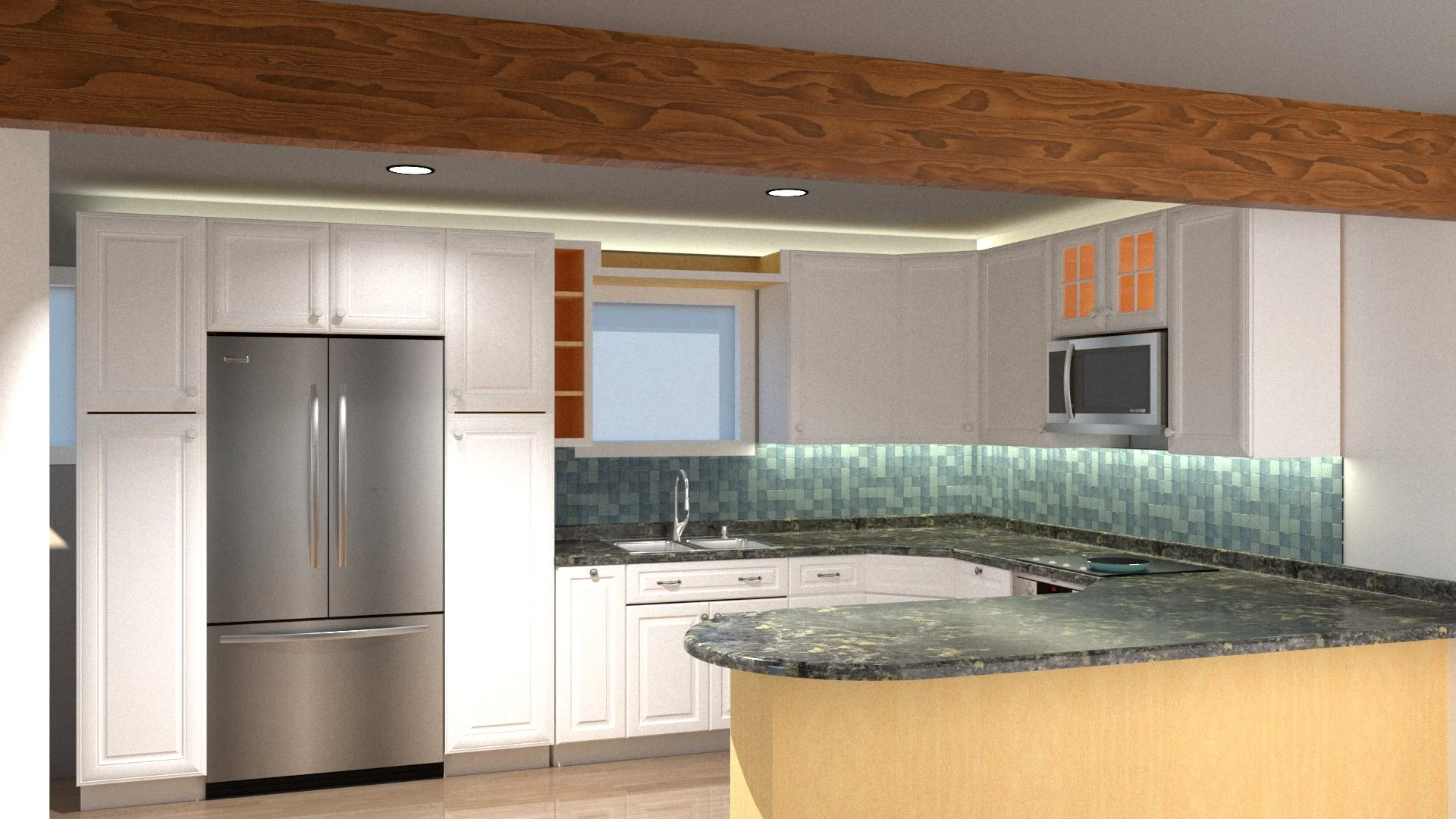
| Typical use | Architectural visualization, game environment modelling, motion graphics and VFX previsualization [1][2] |
| Technical detail | Deep non-destructive modifier stack; Arnold bundled as the default production renderer since 2021; 2027.2 adds editable 3D Gaussian Splats, a Points object and render-time point instancing [1][2] |
What 2027.2 actually changes
3D Gaussian Splats are the centrepiece. 3DGS reconstructs a real object or environment from photographs or video as a cloud of oriented Gaussians, which is often lighter than equivalent polygon geometry. 3ds Max 2027.2 imports the standard PLY format, Niantic Spatial’s SPZ and Xgrids’ LCC, previews the result in ActiveShade, edits it with the new point modifiers and renders it in Arnold. The scan can be relit, which is the difference between a static photographic blob and a scene element that responds to a virtual sun.
The Points object is the structural change underneath. It represents point data inside Max as Editable Points, Point Spheres or Gaussian Splats. Turn to Point converts a polygon mesh into points by vertex, surface density or volume; Point Select enables kitbashing-style edits; the Array modifier can now take points as input or output. The Point Instance modifier references objects and places instances at points on the modified object, which makes it possible to scatter vegetation or props across hundreds of thousands of positions while keeping the scene interactive [1].
Smart Bevel, introduced in 3ds Max 2027, gets a performance pass: Autodesk claims results up to 20 times faster with 22 times less memory consumption. USD for 3ds Max 0.16.2 adds diagnostics for asset paths, and the UI gains a button that launches Autodesk’s AI-powered Flow Studio. The last one is literally a launcher, not a feature inside Max, but it signals where Autodesk wants the surrounding workflow to go [1].
The modifier stack is the product
3ds Max’s identity is the modifier stack: every operation stays live, stacked on top of the base geometry and editable in any order. Move a wall, change a bevel, swap a material, and the downstream operations update. That is different from a destructive polygon edit and different from a fully parametric CAD feature tree. It is a middle ground that suits visualization, where a design changes repeatedly and the model must absorb the change without a rebuild.
MAXScript and the Max Creation Graph extend the stack into a studio toolchain. MAXScript automates repetitive work and builds custom tools; MCG lets technical artists assemble modifiers and utilities from nodes and package them as shareable files. The result is an application that becomes more valuable as a studio invests in it, which is also why switching away is expensive.
First turn: from DOS to the archviz standard
The lineage begins with 3D Studio for DOS, developed by the Yost Group and published by Autodesk. After 3D Studio DOS Release 4, the product was rewritten for Windows NT and renamed 3D Studio MAX; it shipped in April 1996 through Kinetix, Autodesk’s media and entertainment division. Autodesk bought the product at the second release update and internalized development, later renaming it 3ds Max under the Discreet brand before returning to the Autodesk name.
The application became the default in architectural visualization because it combined accessible polygon modelling, a deep modifier stack, a vast plugin market and a renderer ecosystem that studios could standardize on. V-Ray and Corona became the two names most associated with photoreal archviz, and 3ds Max was the common host. Arnold arrived as a bundled renderer and became the default production renderer in 2021, which reduced the initial setup cost but did not remove the demand for V-Ray or Corona in studios that had built their look around them.
Second turn: the subscription and the Windows-only tax
At $255 per month or $2,010 per year, 3ds Max is priced as professional software. The Indie subscription at $330 per year is a genuine relief for individual artists, but it is gated by revenue and project-value thresholds: under $100,000 per year in many countries. A small studio that crosses the line loses the discount abruptly, which makes the Indie tier a useful entry point rather than a permanent home.
The Windows-only constraint is the other cost. A studio that runs macOS or Linux must either keep a Windows workstation or virtualize, and virtualization adds GPU-passthrough complexity. There is no macOS build and no Linux build. For a pipeline that already standardizes on Windows, this is invisible; for a cross-platform team, it is a real operational tax that competing tools like Blender, Cinema 4D and Maya do not impose.
Third turn: Gaussian Splats are a scan-data bet
The 2027.2 release is a bet that the next wave of archviz and VFX content will include captured reality, not only modelled geometry. A Gaussian Splat of a building facade or a forest can be far lighter than a photogrammetric mesh and can look convincing from a range of viewpoints. By importing PLY, SPZ and LCC, editing with points and rendering in Arnold, 3ds Max positions itself as a place where scanned and modelled content share a scene.
The bet has limits. 3DGS is not a replacement for clean topology; it is a representation for captured detail, and it does not solve the problems of collision, animation or precise editing. The point modifiers are a first pass, not a full modelling toolkit for splats. The value is in the combination: a modelled building with a scanned context, lit by the same Arnold environment. That is a workflow that archviz studios can understand immediately.
Hardware and performance notes
3ds Max runs on Windows 10 and 11. Modelling performance depends on single-core CPU speed, viewport GPU performance and RAM; large scenes with many objects, high-resolution textures and deep modifier stacks benefit from 32–64 GB of RAM and a discrete GPU. Arnold can render on the CPU or GPU; GPU rendering requires a supported NVIDIA card, and the performance difference between CPU and GPU depends on the scene and the shader mix.
Gaussian Splats add a new memory consideration. A large captured environment can be light on disk and heavy in VRAM, especially when relit in Arnold. Point instancing can also multiply scene complexity quickly. A practical workstation for scan-heavy archviz is a recent multi-core CPU, 64 GB of RAM, an RTX-class GPU with 16–24 GB of VRAM and fast NVMe storage.
Who should choose it — and who should not
| Profile | Fit | Reason |
|---|---|---|
| Architectural visualization studio | Excellent | The plugin ecosystem, modifier stack and V-Ray/Corona/Arnold support are unmatched for archviz. |
| Game environment artist | Strong | Polygon modelling, scattering and FBX/glTF export fit environment production. |
| Motion graphics artist | Strong | MCG, point instancing and the modifier stack support procedural motion work. |
| Individual artist under the Indie threshold | Good | The $330/year Indie tier makes it accessible, within the eligibility limits. |
| macOS or Linux studio | Weak | No native build; Windows is mandatory. |
| Sculpting or character animation specialist | Conditional | Maya or ZBrush are stronger for character rigging and high-end sculpting. |
Alternatives at a glance
| Tool | Licence model | Where it fits |
|---|---|---|
| Autodesk Maya | Subscription | Character animation, rigging and VFX pipelines across Windows, macOS and Linux. |
| Blender | Free / open source | Modelling, animation, rendering and an open pipeline with no licence cost. |
| Cinema 4D | Subscription | Motion graphics and product visualization with a strong MoGraph toolset. |
| SketchUp | Subscription | Early architectural massing and documentation, with a lighter learning curve. |
| Unreal Engine | Free / royalty | Real-time visualization and virtual production rather than offline rendering. |
Verdict
3ds Max 2027.2 is a confident update to a tool that knows exactly who it serves. The Points system and editable Gaussian Splats extend the application into captured reality without abandoning the modifier-stack workflow that archviz studios depend on. Smart Bevel and USD diagnostics are the kind of unglamorous improvements that matter in daily production, and the Flow Studio button is a sign of where Autodesk wants the surrounding pipeline to go.
The limits are real: Windows only, rental only, and a plugin ecosystem that can cost as much as the subscription. If you work in architectural visualization on Windows, 3ds Max remains the reference. If you need cross-platform character animation, a fully local pipeline or a free tool, another application will serve you better. The right question is not whether 3ds Max is the most modern modeller; it is whether your studio’s look depends on the ecosystem that only Max has.
References
The version, pricing, platform and 2027.2 feature details below were checked against the primary sources listed here.