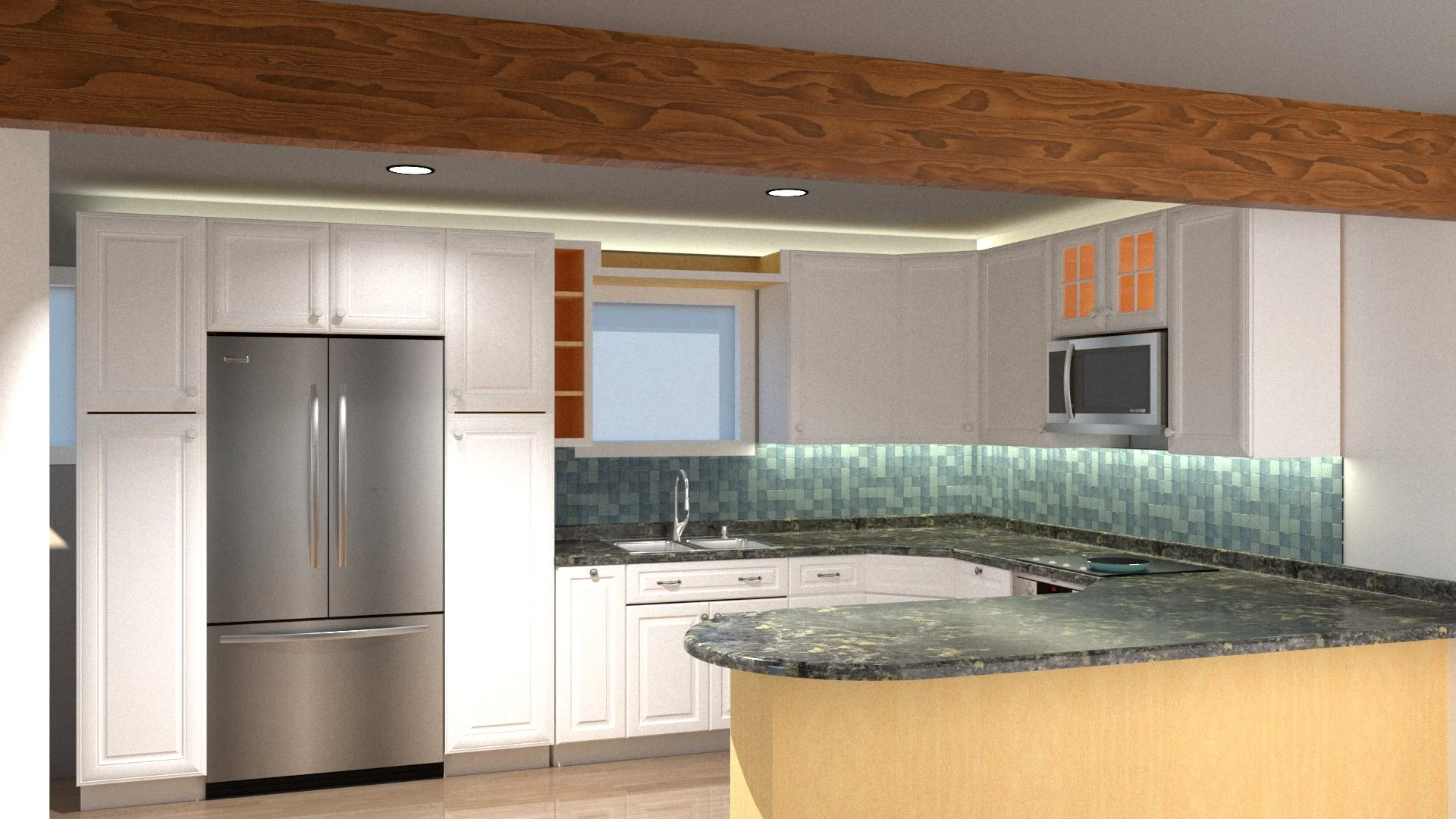






February 2009, Prague. When computer graphics student Ondřej Karlík grew frustrated with the tangled ray-tracing dials of the era and began writing an engine meant to deliver natural light even on default settings, the project was little more than a university experiment [3]. Together with Adam Hotový and Jaroslav Křivánek, Karlík formed Render Legion, shipped Corona 1.0 on February 25, 2015, and watched Chaos acquire the company in August 2017 [3]. Released on May 27, 2026, Chaos Corona 15 keeps that celebrated ease of use intact for architectural visualization while bundling the Veras AI ideation tool at no extra cost, introducing a Glints layer for sparkling surfaces, and letting Gaussian Splats participate directly in global illumination (GI) [1][2].
Chaos Corona at a Glance
| Current version | Corona 15 — May 27, 2026 [1][2] |
| Developer | Chaos (originated in Prague in 2009 / Render Legion; part of Chaos since August 2017) [1][3] |
| Pricing | Solo $414/year (€375/year); Premium $562.80/year (€490.80/year); monthly plans also available [1][2] |
| License model | Commercial subscription [1] |
| Platforms | Officially supported only for Autodesk 3ds Max and Maxon Cinema 4D [1][2] |
| File formats | Chaos Cosmos assets, USD, FBX, OBJ, EXR, .ply / .spz Gaussian Splats [1][2] |
| Typical use | Interior design, residential and commercial architectural visualization (ArchViz), product and furniture scenes [1][2] |
| Technical notes | Physically based CPU engine with smart defaults; Corona VFB & LightMix; Chaos Vantage live preview; Corona 15 adds free Veras AI, Physical Material Glints layer, and GI-bouncing Gaussian Splats [1][2] |
What Corona 15 changes
Free Veras AI Inside the Corona VFB: Corona 15’s biggest headline is Veras, embedded straight inside the Corona Virtual Frame Buffer (VFB) and included free with every Corona subscription [1][2]. Without leaving Corona, an architect can send a draft or finished frame to Veras and generate alternative material proposals, seasonal or lighting variations, or short architectural motion sketches in seconds—dramatically speeding up early concept exploration ahead of client meetings.
Glints Layer and GI-Interactive Gaussian Splats: A new Glints layer added to the Physical Material simulates micro-flakes in metallic car paint, sand grains, snow crystals, and frost sparkle without building tangled shader node graphs [2]. Meanwhile, drone or smartphone Gaussian Splat surroundings no longer sit passively behind the building: they interact with scene sun and artificial lights and bounce Global Illumination (GI) back into the interior [1][2]. One-click sun/moon placement inside the VFB and semantic search in Chaos Cosmos round out the daily speedups.
Product philosophy: Architectural results, not settings menus
Traditional renderers often force artists to wrestle with light subdivisions, photon maps, and adaptive thresholds just to get a noise-free interior. Corona grew on the opposite promise: set lights close to real-world physical scale, leave the defaults alone, and press render. Inside the Corona VFB, LightMix then lets you dim daylight, switch on chandeliers, and shift LED strip warmth after a single render finishes—giving clients three distinct atmospheres without waiting for three separate renders.
First turn: From a student project to the Chaos family
Watching a graduate student’s experiment in Prague grow within a few years into the fiercest challenger to V-Ray among 3ds Max architects is rare in graphics history [3]. When Chaos bought Render Legion in August 2017, part of the community worried Corona’s clean interface might be folded into V-Ray. Instead, Chaos strengthened both engines side by side: V-Ray kept deep pipeline control and eight host platforms, while Corona gained pure ArchViz speed, the Chaos Cosmos library, and live Vantage streaming [1][3].
Second turn: Annual pricing advantage and Chaos Cloud collaboration
Choosing annual billing on Corona 15 cuts subscription costs to nearly half the monthly rate: Solo at $414/year (€375) and Premium at $562.80/year (€490.80) with extra tools and cloud collaboration [1]. Strengthened in Corona 15, Chaos Cloud Collaboration lets architecture practices send clients a browser-based 3D stream link so stakeholders can pin markups and leave feedback directly on the frames [2].
Third turn: Only two host apps and limits on stylization
Before committing to Corona, pay attention to its sharpest boundary: platform support. Official Corona plugins ship exclusively for Autodesk 3ds Max and Maxon Cinema 4D [1][2]. There is no official Corona plugin for SketchUp, Revit, Rhino, or Blender (the BCorona bridge for Blender is a community effort unsupported by Chaos). Second, because Corona clings tightly to physical accuracy, it is far less accommodating than V-Ray, Arnold, or Blender when a project demands cartoonish or intentionally non-photorealistic (NPR/stylized) shaders.
Hardware and performance notes
Corona’s core engine remains grounded in CPU compute, allowing it to chew through sprawling landscapes and furniture libraries totaling hundreds of millions of polygons in system RAM without hitting GPU VRAM ceilings. Consequently, the smartest investment for a 2026 Corona workstation is a high-core-count AMD Ryzen/Threadripper or Intel Core/Xeon processor paired with 64 GB or more of RAM. Adding a modern NVIDIA RTX GPU with 8–16 GB VRAM further accelerates Chaos Vantage live path-traced previews and Veras or Gaussian Splat workflows.
Who should choose it, and who shouldn’t
| Profile | Fit | Reasoning |
|---|---|---|
| Interior designer & ArchViz artist | Excellent | Clean indoor/outdoor light and LightMix inside 3ds Max and Cinema 4D with minimal dialing. |
| Residential/furniture studio on tight deadlines | Excellent | Ready-made Chaos Cosmos assets, Veras AI sketching, and fast physical accuracy. |
| Non-Max/C4D users (Rhino, SketchUp, Blender) | Poor | No official plugin exists; look to V-Ray, Lumion, or Cycles instead. |
| Film VFX / stylized animation crew | Poor | Maya/Houdini support and stylized shader freedom point toward V-Ray, Arnold, or Karma. |
| Student seeking a completely free tool | Conditional | Requires a $414/year subscription; on zero budget, Blender Cycles is the strongest option. |
A quick look at alternatives
| Tool | License model | Where it fits |
|---|---|---|
| Chaos V-Ray | Subscription (€474/year Solo) | Runs across 8 host apps with deep AOV/VFX layers and GPU/hybrid control. |
| Lumion Pro | Subscription ($1,149/year) | Real-time exterior presentations and video via one-click LiveSync from Revit/SketchUp/Archicad. |
| Autodesk 3ds Max | Subscription | The primary architectural modeling host where Corona sees its widest adoption. |
| Blender Cycles | Free / GPL open source | Free general-purpose CPU/GPU path tracer with ACEScg support. |
| Unreal Engine | Free / Revenue-based royalty | Interactive architectural walkthroughs and real-time Lumen presentations. |
Bottom line
For more than a decade, Chaos Corona has delivered most faithfully on one promise: photorealistic architectural scenes without wrestling through technical menus. With Corona 15 bundling Veras AI concept exploration, adding the Glints material layer, and bringing GI-bouncing Gaussian Splat environments into the fold, it strikes a remarkably practical balance for 3ds Max and Cinema 4D architects in 2026 [1][2].
If your studio runs on SketchUp, Rhino, or Blender, the door stays closed; yet if your daily work centers on residential interiors or commercial exteriors inside 3ds Max or Cinema 4D, Corona quickly earns back its subscription through sheer hours saved.
Perhaps Corona’s real secret is not offering more buttons, but letting a designer think like a photographer and an architect rather than a render engineer.
Two questions to ask yourself before deciding today:
- Is your primary modeling tool truly 3ds Max or Cinema 4D, or will you need to open a rendering pipeline for a SketchUp/Rhino/Blender team tomorrow?
- In your daily workload, what saves more hours: microscopic parameter control (V-Ray), or fast LightMix and warm interior light straight out of the box (Corona)?
References
Version numbers, history, pricing, and Corona 15 features above are verified against the primary sources listed below.