 EN
 TR
 DE
 FR
 ES
⚡ Blender at a Glance
| Current Version | 5.2.2 LTS — 14 July 2026[1][2] |
| Developer | Blender Foundation[1][2] |
| Pricing | Completely free (no revenue limit)[1][2] |
| License | Open source (GPL)[1][2] |
| Platforms | Windows 11/10/8.1 + Windows on Arm, macOS 13 Ventura+ (Apple Silicon only), Linux (glibc 2.28+)[1][2] |
| File Formats | glTF 2.0, Alembic, USD, OBJ, PLY, STL, FBX, SVG (Grease Pencil), PNG/EXR/WebP/HDR[1][2] |
| Typical Use | Open-source all-in-one DCC for modeling, sculpting, animation, VFX, and rendering.[1][2] |
| Technical Detail | Built-in Cycles path-tracing render engine; node-based procedural modeling with Geometry Nodes. Version 5.2 LTS adds experimental node-based hair/cloth physics and Cycles texture caching.[1][2] |
| Important Note | COLLADA (.dae) support was removed in 5.x; only works with 4.5 LTS.[1][2] |
History and Background
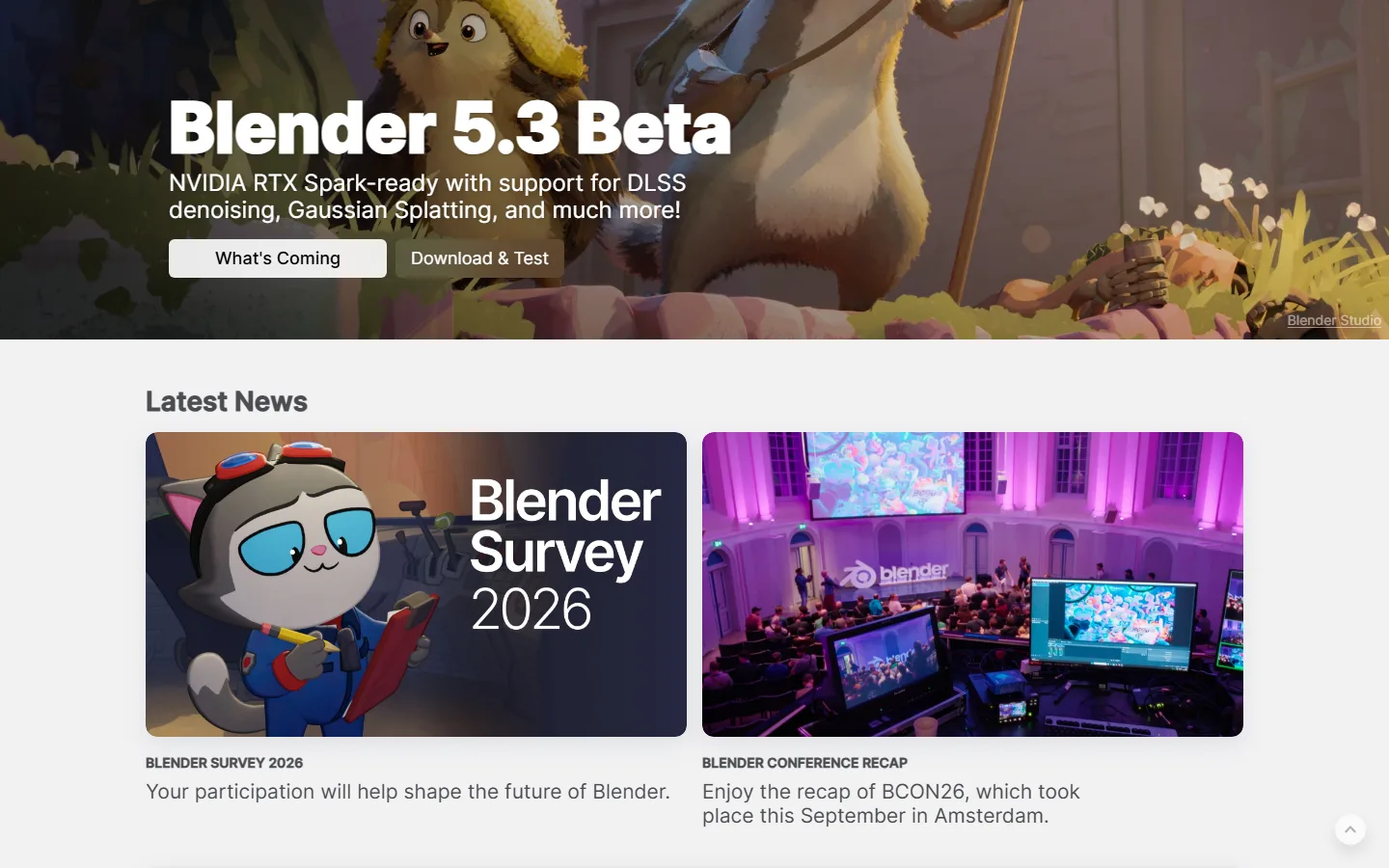
Blender traces its roots to a small animation program called Anonimo 3D, written in 1994 in the Netherlands by Ton Roosendaal. Roosendaal founded the Blender Foundation to both develop the software and keep it in public hands. Today the Foundation is a non-profit funded by donations, with every developer working voluntarily or under sponsorship. Release 5.2 LTS shipped in July 2026 and is supported until July 2028. Microsoft, Unity, Ubisoft and a long list of major studios use Blender in production, and the annual Blender Conference has become one of the sector’s largest free professional events.
Strengths
- The most complete package available: modeling, sculpting, rigging, animation, VFX and rendering in one application.
- Built-in Cycles path tracer alongside the real-time EEVEE engine, in the same file.
- Geometry Nodes gives node-based procedural modeling, so thousands of variants come from one setup.
- The GPL license keeps audit and compliance risk low in enterprise environments.
- Identical feature set on Linux, macOS and Windows, which lowers render farm costs.
What You Should Know
- COLLADA (.dae) support was removed in the 5.x series; pipelines still relying on it must stay on 4.5 LTS.
- Some studio pipelines still depend on custom tool sets built around Maya, Houdini or 3ds Max.
- Non-LTS releases change quickly; API and file-format compatibility is not guaranteed between them.
Who Is It For?
Budget-constrained studios, independent developers, schools and technical artists.
References
The independent sources below were used to verify the version, pricing, license and technical details in this review.