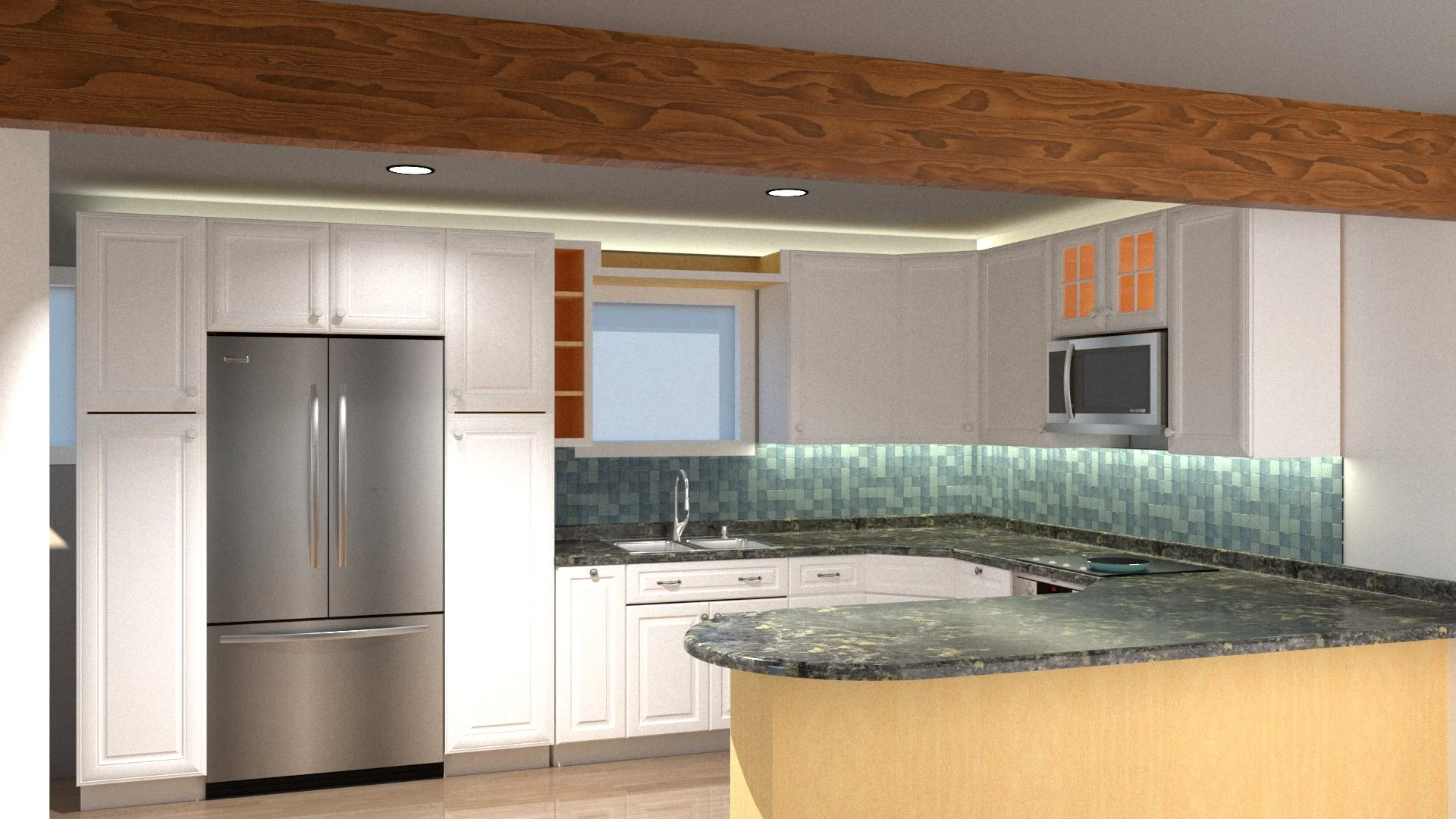






1997, Sofia, Bulgaria. In a small office under the name Chaos Group, Peter Mitev and Vladimir Koylazov began writing a plugin meant to compute cleaner Global Illumination for 3D applications [2]. Over the decades that followed, that plugin grew into the shared lighting benchmark for architectural visualization studios and Hollywood VFX houses alike—earning Koylazov a Scientific and Technical Academy Award and Chaos a 2021 Engineering Emmy Award [2]. Now matured with V-Ray 7, Update 5 (V-Ray 7.5), released on November 5, 2026, the seventh generation (V-Ray 8 does not exist yet) no longer stops at glass caustics or polygon meshes: it relights 3D Gaussian Splat captures directly under ray-traced lights and brings Chaos AI Assistant plus MCP agent connectivity straight into the scene [1][3][4].
Chaos V-Ray at a Glance
| Current version | V-Ray 7, Update 5 (V-Ray 7.5 — November 5, 2026; V-Ray 7 originally launched for 3ds Max in October 2024; V-Ray 8 does not exist) [2][3][4] |
| Developer | Chaos (founded in Sofia in 1997; never owned by Autodesk) [1][2] |
| Pricing | Solo €474/year; Premium €706.80/year; Collection €1,138.80/year; V-Ray for Blender sold separately + free Community Edition [1][2] |
| License model | Commercial subscription (single license covers all supported host applications) [1] |
| Platforms | Plugin for 3ds Max, SketchUp, Revit, Rhino, Cinema 4D, Blender, Maya, and Houdini [1][2] |
| File formats | .vrscene, USD, OBJ, FBX, Alembic, VDB, EXR, .ply / compressed Gaussian Splats [1][2] |
| Typical use | Production-grade physically based rendering for architectural visualization (ArchViz), product shots, commercials, and film VFX [1][2] |
| Technical notes | CPU, GPU, and hybrid (XPU) path tracing; V-Ray Frame Buffer (relighting and compositing); V-Ray Proxies; AMD HIP GPU return and Vantage Live Link [1] |
What the V-Ray 7 and 7.5 generation changes
Gaussian Splat Relighting and Animation: Traditional photogrammetry and drone scans yield 3D Gaussian Splat files locked into the harsh shadows and lighting conditions baked in during capture. The V-Ray 7 generation does far more than drop those .ply or compressed splat captures into the background: artists can cast V-Ray lights onto them and compute dynamic shadows, reflections, and full relighting [1]. Animated splat sequences also stream into real-time ray tracing through Chaos Vantage Live Link.
Chaos AI Assistant, MCP, and AMD HIP in V-Ray 7.5: Shipped on November 5, 2026, Update 5 (7.5) introduces two substantial layers. The first is the in-scene Chaos AI Assistant—featuring Sky Match to derive HDRI and LUT settings from a reference image, and Render Critique to score finished frames on composition and lighting—alongside MCP server support linking external AI agents to V-Ray [3][4]. The second is the return of AMD HIP GPU acceleration on V-Ray GPU with out-of-core memory support, plus native VRayVolume and OpenVDB volumetric shading tools inside 3ds Max [3][4]. Around the same milestone, Chaos also opened the free non-commercial V-Ray for Blender Community Edition to open-source artists.
Product philosophy: One lighting language across eight host apps
V-Ray’s defining strength is not merely that renders look crisp inside 3ds Max. It is that an industrial designer in Rhino, an architect in Revit, an animator in Maya, and an effects artist in Houdini can all share the exact same .vrscene pipeline and V-Ray Material vocabulary [1][2]. A studio can assemble base geometry in SketchUp, export a .vrscene into 3ds Max, and swap in millions of polygons of foliage and furniture via V-Ray Proxies without choking system memory.
Meanwhile, the V-Ray Frame Buffer (VFB) trims down emergency trips to Photoshop after a frame finishes: with LightMix you can tweak light color and intensity post-render, and finish layered compositing and color grading right inside the render window.
First turn: From an independent plugin to a visual standard
Many users assume V-Ray is a native Autodesk module built into 3ds Max; in reality, Chaos has operated independently since 1997 [2]. By acquiring chief rival Render Legion (developer of Corona) in 2017 and merging with real-time specialist Enscape in 2022, Chaos gathered the deepest VFX/ArchViz engine (V-Ray), the fastest “looks great out of the box” engine (Corona), and real-time walkthrough tools (Enscape/Vantage) under one roof [2].
Second turn: Host-agnostic licensing and the Blender split
Chaos no longer sells siloed host licenses such as “V-Ray for 3ds Max only” or “V-Ray for Rhino only” [1]. A single Solo (€474/year) or Premium (€706.80/year) subscription unlocks every supported host application [1]. The decisive distinction lies in flexibility and ecosystem scope: Solo is locked to one named user on a single workstation, whereas Premium opens floating access and steps toward the Collection (€1,138.80/year) tier bundling extra render nodes and sister tools like Chaos Cosmos, Vantage, and Phoenix [1]. Only dedicated Blender users keep a lower-priced, standalone V-Ray for Blender option.
Third turn: The price of control — setup and hardware overhead
V-Ray exposes nearly every law of physical light transport as an adjustable parameter. That granularity is unmatched in film VFX and demanding architectural commissions, yet it confronts newcomers looking for “two-click beauty” with an intimidating wall of dials. Inside the very same studio, a team producing straightforward interior or exterior ArchViz often reaches comparable visual polish in half the setup time with Corona. And while V-Ray offers CPU, GPU, and hybrid modes, heavy production scenes quickly drive up render-node expenses and VRAM requirements.
Hardware and performance notes
V-Ray scales across high-core-count CPUs—crucial when massive scenes demand 64–128 GB of system RAM—as well as NVIDIA CUDA/OptiX and the newly reinstated AMD HIP GPU backends [1]. On the GPU side, keeping scene geometry and textures within video memory remains decisive for speed; for 2026 production work, NVIDIA RTX cards packing 16–24 GB VRAM paired with disciplined V-Ray Proxies and compressed textures strike the most reliable balance.
Who should choose it, and who shouldn’t
| Profile | Fit | Reasoning |
|---|---|---|
| Mixed-software ArchViz studio | Excellent | Seamless .vrscene pipeline across SketchUp, Revit, Rhino, 3ds Max, and Cinema 4D under one subscription. |
| Film VFX & commercial lighting team | Excellent | Deep Maya/Houdini integration, rich AOV/compositing layers, and Gaussian Splat relighting. |
| Fast product visualization designer | Very Good | Hybrid CPU/GPU speed and Chaos Cosmos assets, though KeyShot demands less setup. |
| Architect focused purely on quick interiors/exteriors | Conditional | If your base tool is 3ds Max or Cinema 4D, Chaos Corona offers a much gentler learning curve. |
| Zero-budget independent Blender artist | Conditional | Non-commercial users can test the Community Edition; otherwise built-in Cycles costs nothing. |
| Real-time game or interactive walkthrough work | Poor | Offline path tracer; interactive client walkthroughs call for Vantage, Lumion, or Unreal. |
A quick look at alternatives
| Tool | License model | Where it fits |
|---|---|---|
| Chaos Corona | Subscription ($414/year Solo) | Photorealistic ArchViz in 3ds Max and Cinema 4D with minimal technical dialing. |
| Lumion Pro | Subscription ($1,149/year) | Real-time landscapes and VR walkthroughs for architects via LiveSync CAD/BIM links. |
| KeyShot Studio | Subscription ($1,299/year Pro) | Rapid industrial product rendering straight from CAD without full DCC scene setup. |
| Blender Cycles | Free / GPL open source | Zero-subscription path tracing with ACEScg and Texture Cache support. |
| Arnold (inside Maya/Max) | Bundled / Single license | Deep Maya and Houdini pipeline integration for film VFX studios. |
Bottom line
Chaos V-Ray 7.5 (Update 5) carries nearly three decades of physically based lighting heritage into November 2026 with 3D Gaussian Splat relighting, AMD HIP GPU support, an in-scene AI Assistant, and MCP connectivity [1][3][4]. Whether you are lighting a high-rise facade in 3ds Max or a photorealistic spot in Maya, V-Ray remains the yardstick for professionals who refuse to surrender the last millimeter of control.
Still, a €474/year starting subscription and dense parameter tree represent more machinery than every project actually requires. If your primary 3D suite already ships with free Cycles or your daily output revolves around fast architectural interiors, let your real need for fine-grained control—not industry habit—decide the purchase.
Perhaps V-Ray’s enduring edge lies not in being the fastest render engine on paper, but in serving as the invisible translator that lets eight separate 3D programs speak the exact same physics of light.
Two questions to ask yourself before deciding today:
- When your team exchanges scenes between SketchUp/Revit/Rhino and 3ds Max/Maya, do you genuinely need a host-agnostic
.vrscenestandard? - In your daily workload, does granular lighting control save you more time (V-Ray), or does hitting warm, clean architectural light straight out of the box win the week (Corona)?
References
Version numbers, history, pricing, supported platforms, and V-Ray 7/7.5 features above are verified against the primary sources listed below.
- Chaos — “V-Ray Official Product, Pricing & Supported Host Platforms”
- Wikipedia — “V-Ray”, Chaos Group history, Academy & Emmy Awards
- Chaos Blog — “V-Ray 7, Update 5: Easier to Use & More Powerful Than Ever” (November 5, 2026)
- CG Channel — “Chaos releases V-Ray 7.5 for 3ds Max with new AI features” (November 8, 2026)