




Machining suppliers are increasingly asked for a carbon footprint per part number, not a plant average divided by annual output. This guide is for CNC engineers and production managers who have to answer that request. It shows how to model the Product Carbon Footprint (PCF) of a machined part, where the EU Carbon Border Adjustment Mechanism (CBAM) and ISO 14067 / GHG Protocol boundaries differ, and which input usually dominates the result.
Parts with different geometries, alloys and cycle times cannot share one plant average. A cradle-to-gate calculation for a CNC part separates billet mass, the share turned into chips (Buy-to-Fly), the electricity measured at the machine, consumables, and the recycling benefit of the chips, which is reported on its own line.[4][5]

CNC Part Carbon Accounting at a Glance
| Metric and unit | Product Carbon Footprint (PCF), kgCO2e per part[4][5] |
|---|---|
| Reference standards | ISO 14067:2018, GHG Protocol Product Life Cycle Standard (2011), Regulation (EU) 2023/956 (CBAM)[1][4][5] |
| System boundary | Cradle-to-gate: from raw material production to the part leaving the plant[4][5] |
| Embedded carbon of material | Scope 3 input: billet mass × primary metal emission factor (global primary aluminium 2022: 15.1 kgCO2e/kg; global crude steel: ~1.92 tCO2/t, 2.18 tCO2e/t)[6][8] |
| Machining electricity | Scope 2 for customer PCF / Scope 3 requests: measured kWh per part × grid emission factor (Turkey, distribution-connected, 2023: 0.469 kgCO2e/kWh)[9] |
| Chips and scrap | Under the GHG Protocol Product Standard, avoided-burden credit may not be deducted from the inventory result; it is reported separately[5] |
| Tools and coolant | Tungsten carbide (WC) powder: 14 kgCO2e/kg for typical non-Chinese production, 69 kgCO2e/kg for Chinese production; recycling lowers the impact substantially[11][13]. Coolant: concentrate plus pump and chiller electricity |
| Typical weighting | Depends on Buy-to-Fly and alloy: in high-chip aluminium parts the material share can exceed 90%; in low-BTF steel and long-cycle work the electricity share grows. |
Why a Plant Average Fails at Part Level
A corporate inventory under ISO 14064-1 adds up the plant’s annual electricity, gas and fuel. Dividing that total by the number of parts produced causes three problems for a part-level PCF:[4][5]
- Wrong allocation. A small aluminium washer machined in one minute and a heavy housing that runs for hours on a 5-axis machine can come from the same building. An average loads the light part with too much carbon and the long-cycle part with too little.
- Hidden improvements. Toolpath optimisation, shorter cycles or near-net billets disappear inside the plant average when nothing is measured per part.
- Audits and customer requests. ISO 14067 and the GHG Protocol Product Standard prefer direct, unit-process data over general allocation wherever possible. In machining that means pairing the part start/end timestamps from the CNC control with power-analyser data from the cabinet to get kWh per part.[4][5]
CBAM (EU 2023/956) and ISO 14067 Cover Different Things
A common mistake is to assume that CBAM and the ISO 14067 footprint a customer asks for share the same scope. Their legal and technical boundaries differ.[1][2]
Aluminium and iron and steel under CBAM: indirect emissions are excluded
Under Regulation (EU) 2023/956, Annex II and Article 7(1), only direct emissions count for iron and steel and aluminium goods (for example anode CO2 and PFC gases from aluminium electrolysis). The Commission’s CBAM Guidance No. 3 states that indirect emissions from electricity are not relevant for goods listed in Annex II; indirect emissions are counted for sectors such as cement and fertilisers.[1][2]
The second boundary is the customs code (CN code) and a volume threshold. Iron and steel fasteners (CN 7318: screws, bolts, nuts, washers) are in CBAM Annex I, while most complex machined aluminium parts, such as aerospace or general machinery sub-assemblies, are outside the current Annex I list. In the definitive period, importers below a cumulative 50 tonnes per year are exempt from CBAM declarations.[3]
So the business reason for measuring electricity (Scope 2) and embedded material carbon (Scope 3) per CNC part is usually not a CBAM electricity charge. It is that automotive, aerospace and machinery OEMs ask for part-number PCF data for ISO 14067, CSRD ESRS E1 and supply-chain Scope 3 reporting.[4][5]
Scopes 1, 2 and 3 on a CNC Machine, and Buy-to-Fly
- Scope 1 (direct plant emissions): on-site gas heating, forklift and logistics fuel, and any refrigerant leaks.
- Scope 2 (purchased electricity): kWh drawn by cutting, auxiliary pumps and chillers, and standby, multiplied by the grid emission factor.
- Scope 3 (indirect inputs): embedded carbon of the billet, carbide tool wear, coolant life cycle and transport of raw material to the plant.[4][5]
In aerospace, defence and mould making, the ratio of purchased material to finished part mass (Buy-to-Fly) often reaches 5:1 to 10:1 for monolithic high-strength parts. In such jobs the main driver of the footprint is not the machine’s electricity but the metal that ends up as chips.[6]
According to the International Aluminium Institute (IAI), global cradle-to-gate primary aluminium was 15.1 kgCO2e/kg in 2022 (14.8 in 2023). Plants on hydropower come in around 4 kgCO2e/kg, while coal-heavy grids push it towards 20. Remelting clean scrap into secondary aluminium needs about 5% of the energy of primary production; the IAI recycled dataset gives about 0.52 kgCO2e/kg.[6][7]
How to Treat the Chip Credit
- GHG Protocol Product Standard (2011): avoided emissions outside the life-cycle boundary, such as recycled chips replacing primary metal on the market, “shall not be deducted from the product’s total inventory results”. They may only be reported separately as additional information.[5]
- ISO 14067:2018 (Annex D): describes both the cut-off approach (the billet’s full burden goes to the part; chips leave with zero burden) and system expansion / avoided burden, but requires the chosen method to be justified in the goal and scope and to follow any applicable Product Category Rules.[4]
The safest practice is therefore to report the gross inventory PCF on one line and the chip recovery credit on a separate line of additional information. That stays within the GHG Protocol and still shows the customer the benefit of clean chip handling.[5]
Grid Emission Factors and Consumables
- Turkey: official 2023 factors from the Ministry of Energy and Natural Resources: national generation 0.434, transmission-connected consumption 0.436, and distribution-connected consumption including grid losses 0.469 kgCO2e/kWh.[9]
- Germany: Umweltbundesamt gives 0.386 kgCO2/kWh for the 2023 electricity mix and 0.363 for 2024.[10]
Two consumables come on top of electricity. Carbide tools (WC-Co): Furberg et al. (2019) report 14 kgCO2e per kg of tungsten carbide (WC) powder for typical non-Chinese production (baseline case), against 69 kgCO2e/kg for Chinese production from Ma et al. (2017); the same study finds that recycling reduces the impacts substantially.[11][13] Coolant: besides the concentrate itself, the load comes from high-pressure pumps, chillers and filtration, which belong to the machine’s non-cutting electricity. In Gutowski et al. (2006), actual machining was at most 14.8% of the total energy on an automotive machining line, and 65.8% on a 3-axis CNC milling machine; the rest went to start-up and run-time loads such as spindle, coolant pump, servos and computer.[12]
Calculation Model: Inventory and Additional Information
// 1. Gross cradle-to-gate PCF (GHG Protocol inventory result)
PCF_gross = CF_material + CF_electricity + CF_tool + CF_coolant

- CF_material    = m_billet × EF_primary_metal                 [kg × kgCO2e/kg]
- CF_electricity = (E_cut + E_base + E_setup) × EF_grid       [kWh/part × kgCO2e/kWh]
- CF_tool        = ∑ [ (m_insert_i / N_life_i) × EF_carbide ]   [kg/part × kgCO2e/kg]
- CF_coolant     = V_used_per_part × EF_coolant_lifecycle       [kgCO2e/part]

// 2. Reported separately: chip recovery credit (not deducted)
CR_chips = m_chips × (EF_primary_metal - EF_secondary_remelt) × η_recovery
[m_chips = m_billet - m_part ; η_recovery: collection and remelt yield]
Worked Example (Illustrative): Aluminium Bracket
This is an illustrative engineering example. The production data do not come from a real plant; they are assumed values for a typical 5-axis aerospace bracket. The primary and secondary aluminium factors come from IAI 2022 and the grid factor from the Turkish 2023 distribution-connected value. Electricity (11.0 kWh), billet and part mass (8.0 kg / 1.2 kg), chip recovery yield (80%), tool wear (1.2 g at an assumed 40 kgCO2e/kg) and the coolant share (0.04 kgCO2e) are assumptions.
- Billet and part (assumed): 8.0 kg primary aluminium → 1.2 kg part; chips = 6.8 kg (Buy-to-Fly 6.67:1).
- Electricity (assumed): 11.0 kWh per part over a 45-minute cycle.
- Grid factor (Turkey 2023, distribution): 0.469 kgCO2e/kWh.[9]
- Material factor (IAI 2022 global primary): 15.1 kgCO2e/kg.[6]
- Secondary remelt (IAI): 0.52 kgCO2e/kg; assumed clean/briquetted chip recovery yield 80%.[6]
- Tool and coolant (assumed): 0.0012 kg WC-Co × 40 kgCO2e/kg = 0.048 ≈ 0.05 kgCO2e; coolant share 0.04 kgCO2e.
| Item | Input | Factor | Result (kgCO2e/part) |
|---|---|---|---|
| 1. Billet embedded carbon (Scope 3) | 8.00 kg aluminium | 15.10 kgCO2e/kg | +120.80 (95.84%) |
| 2. Machining electricity (Scope 2) | 11.00 kWh/part | 0.469 kgCO2e/kWh | +5.16 (4.09%) |
| 3. Carbide tool (Scope 3, assumed) | 0.0012 kg WC-Co/part | 40.00 kgCO2e/kg | +0.05 (0.04%) |
| 4. Coolant share (assumed) | Emulsion use and disposal | Illustrative unit share | +0.04 (0.03%) |
| GROSS INVENTORY PCF (GHG Protocol) | No credit deducted from the inventory | 126.05 kgCO2e/part | |
| Additional information: chip recovery potential | 6.80 kg aluminium chips | (15.10 − 0.52) × 0.80 = 11.664 kgCO2e/kg | 79.32 (reported separately) |
| Comparison only: credit deducted | Scenario comparison; not a GHG Protocol inventory statement | 46.73 kgCO2e/part | |
The illustrative table shows two things. First, in an aluminium part with a Buy-to-Fly of 6.67:1, electricity is only 4.09% of the gross footprint (5.16 / 126.05) and material is 95.84%. Second, sourcing low-carbon billet (hydro-based or high recycled content) and keeping chips clean and separated by alloy moves the result far more than cutting electricity alone.[6][7]
Which Framework Applies, by Customer Type
| Sector / scope | Framework | Key boundary |
|---|---|---|
| Goods under EU CBAM (aluminium, steel, CN 7318 fasteners) | Regulation (EU) 2023/956 and Commission guidance. Accredited verification or EU default values. | Under Annex II, electricity (indirect emissions) is excluded for iron, steel and aluminium; only direct emissions count. 50-tonne annual import threshold.[1][2][3] |
| Automotive and machinery OEM suppliers | ISO 14067:2018, GHG Protocol Product Standard, customer Scope 3 / CSRD ESRS E1 requests. | Cradle-to-gate PCF per part number; CNC electricity (Scope 2) and material (Scope 3) are reported together.[4][5] |
| Aerospace and defence subcontractors | Cradle-to-gate LCA, material certificates (EN 10204 3.1), chip traceability by alloy. | With high Buy-to-Fly, billet origin (primary vs. recycled share) weighs more than electrical efficiency.[6] |
Shop-Floor Setup: From Machine Data to Part Record
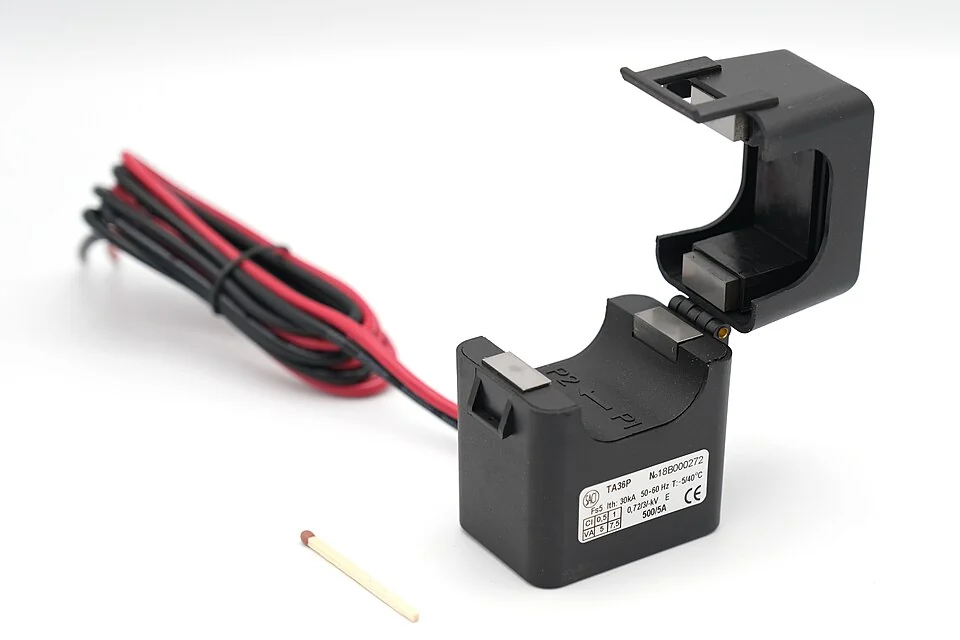
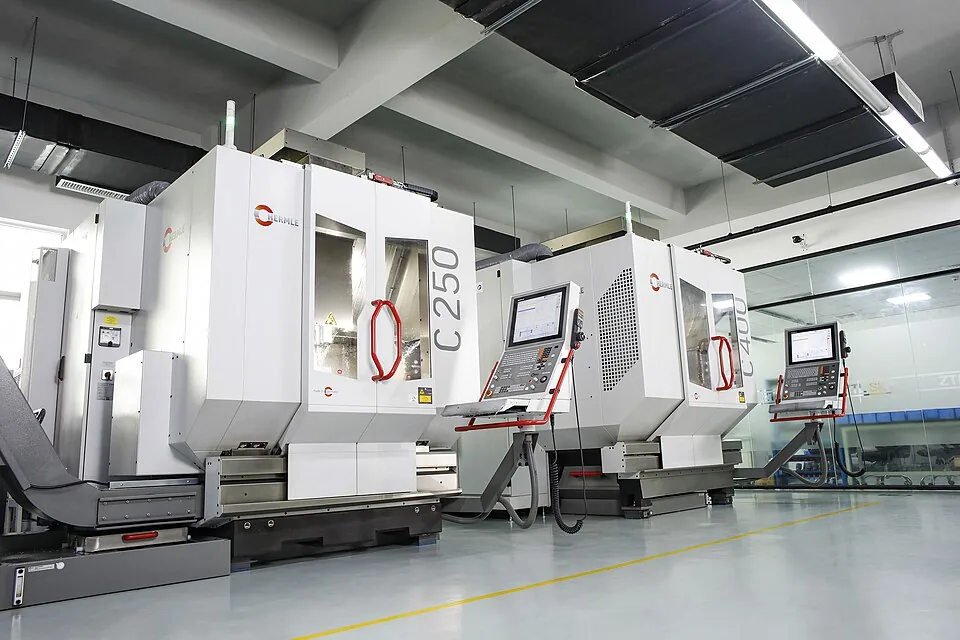
- Pair control data with power data. Read the work order, part number and run timestamps from the control (FANUC FOCAS, Heidenhain LSV2 or MTConnect, covered in the CNC control protocols guide), and attach kWh from a cabinet power analyser or a sensor retrofit on older machines to the same work order.
- Link the material certificate in ERP. Record billet gross weight, alloy and the supplier’s emission factor (with primary/secondary share where declared) on the work order.
- Separate chips and the two result lines. Subtract finished part mass to get chip mass, and store gross inventory PCF and chip recovery potential in two separate fields.
Three Steps to Start
First, find out what the customer actually needs: a CBAM Annex II direct-emissions declaration, or a Scope 3 / ISO 14067 part PCF. Second, for high-chip parts, document billet origin and the primary/secondary metal share before focusing on the electricity bill. Third, report the chip recovery credit as separate additional information instead of deducting it from the gross inventory, as the GHG Protocol requires; this avoids a methodological rejection at verification.
References
- European Parliament and Council (2023). Regulation (EU) 2023/956 establishing a carbon border adjustment mechanism (Annex I, Annex II, Article 7). EUR-Lex. eur-lex.europa.eu/eli/reg/2023/956/oj
- European Commission, DG TAXUD (2026). Guidance No. 3 – CBAM methods for the calculation of emissions embedded in goods. PDF
- European Commission, DG TAXUD. CBAM definitive regime. taxation-customs.ec.europa.eu
- ISO (2018). ISO 14067:2018 – Greenhouse gases – Carbon footprint of products – Requirements and guidelines for quantification. iso.org/standard/71206.html
- WRI & WBCSD (2011). Product Life Cycle Accounting and Reporting Standard (GHG Protocol). PDF
- International Aluminium Institute. Factsheet: GHG saving of recycled aluminium (2022 global primary 15.1 tCO2e/t; recycled 0.52 tCO2e/t). PDF
- European Aluminium. Recycling. european-aluminium.eu
- World Steel Association. Sustainability indicators. worldsteel.org
- Republic of Türkiye Ministry of Energy and Natural Resources. Electricity generation and consumption-point emission factors. enerji.gov.tr
- Umweltbundesamt. Strom- und Wärmeversorgung in Zahlen. umweltbundesamt.de
- Furberg, A., Arvidsson, R., Molander, S. (2019). Environmental life cycle assessment of cemented carbide (WC-Co) production. Journal of Cleaner Production 209, 1126–1138 (Table 6). Open-access PDF (Chalmers)
- Gutowski, T., Dahmus, J., Thiriez, A. (2006). Electrical Energy Requirements for Manufacturing Processes. 13th CIRP International Conference on Life Cycle Engineering, Leuven. PDF (MIT)
- Ma, X., Qi, C., Ye, L., Yang, D., Hong, J. (2017). Life cycle assessment of tungsten carbide powder production: A case study in China. Journal of Cleaner Production 149, 936–944. ScienceDirect