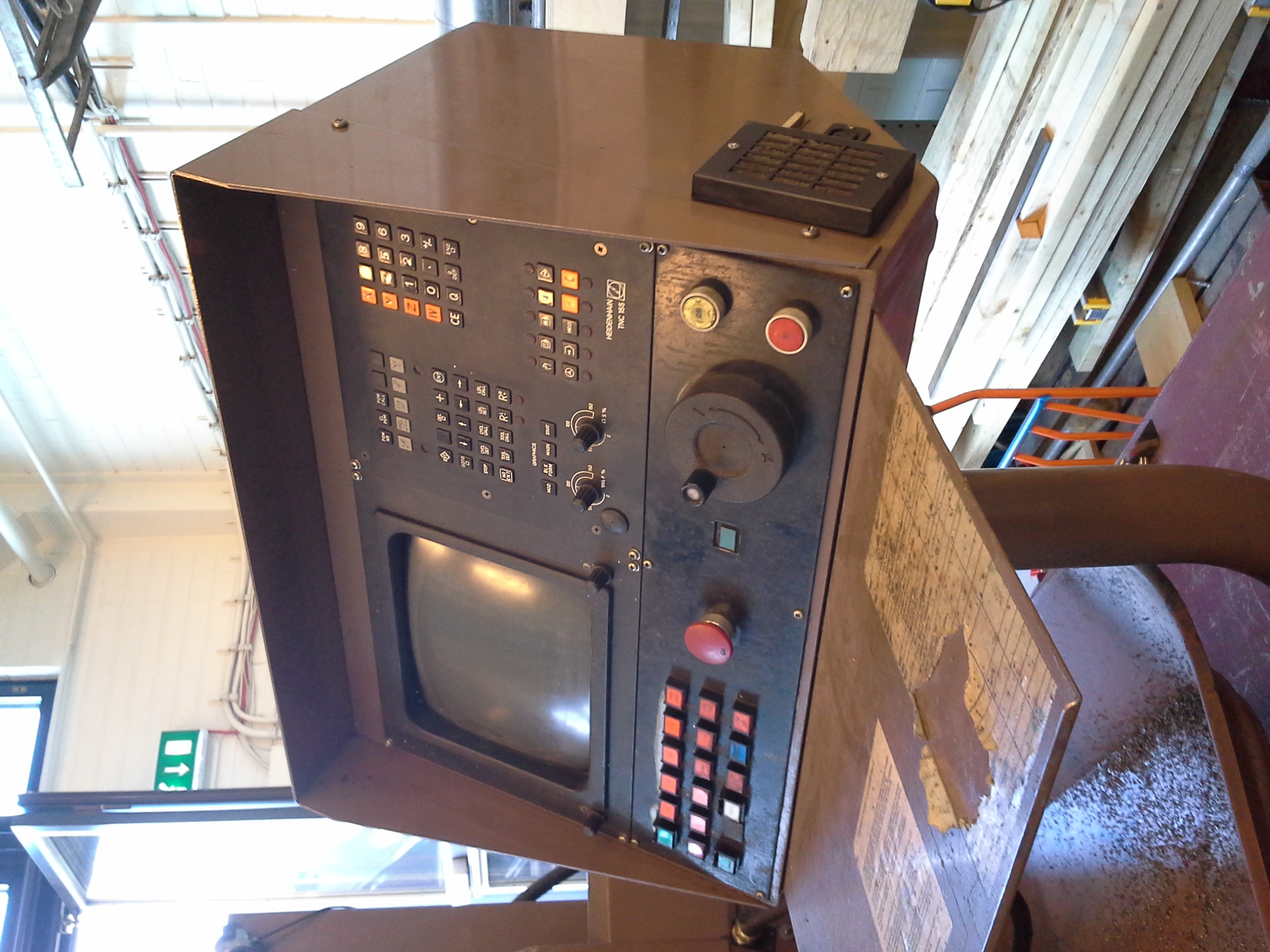





1969, Ōguchi, Japan. A Mazak Junior engine lathe produced by Yamazaki Machinery Works stands silently in the Machine Tool Museum in Minokamo. In that era, the operational “data” of a machine tool was confined to what an operator observed on dial indicators and lever positions; external data transmission rarely exceeded paper punch tapes or manual serial line transfers.[1]
Today’s smart factory narrative begins with a fundamentally different objective: how to visualize the execution state, active part program, and power consumption of these advanced machine tools on a unified dashboard. Engineers searching for a dedicated “Mazak protocol” are typically confronted not by a proprietary binary wire specification, but by an edge gateway: the MAZAK SMARTBOX. This analysis reframes Mazak data integration, shifting the inquiry from “which wire protocol?” to “which gateway, what data depth, and which security boundary?”[2]

Mazak Data Architecture at a Glance
| Manufacturer | Yamazaki Mazak Corporation (Founded 1919, Nagoya; HQ Ōguchi, Aichi, Japan) [1] |
|---|---|
| Control Ecosystem | MAZATROL Smooth CNC series; conversational MAZATROL and EIA/ISO G-code programming [3] |
| Integration Baseline | MTConnect standard delivered via MAZAK SMARTBOX, SENSOR BOX, and Smooth MONITOR AX [2] |
| Network Transport | Embedded MTConnect Agents; SMARTBOX routes through an isolated, encrypted physical port [2] |
| Data Directionality | Strictly read-only; governed by the read-only information model of MTConnect [4] |
| Wire Specification | No public proprietary wire protocol specification exists; documented path is MTConnect gateway architecture [2] |
| Data Scope | Execution state, active program, tool ID, part count, energy usage, temperature/fluid levels [2] |
| Primary Application | Multi-vendor OEE monitoring, enterprise MES analytics, plant-wide energy optimization [2] |
Does a Proprietary “Mazak Protocol” Exist?
The short answer: For developers seeking a public, low-level binary wire specification, there is no documented “Mazak wire protocol.” The longer, more instructive reality is that Mazak intentionally chose not to expose low-level internals directly to plant networks. Instead, Mazak provides a standardized data model via MTConnect, packaged within edge hardware appliances like SMARTBOX and SENSOR BOX. The question “What is Mazak’s protocol?” translates in practice to “Which edge gateway exposes which data depth?”[2][4]
This approach represents a deliberate architectural strategy. While FANUC provides the low-level FOCAS API to inspect internal registers directly, Mazak’s documented integration strategy decouples the machine tool entirely from external enterprise networks by outputting standardized, read-only telemetry. These approaches address different priorities: one delivers deep internal access, while the other emphasizes network isolation, cybersecurity, and vendor neutrality.[2]
SMARTBOX: An Industrial Edge Security Appliance
Because of its name, the MAZAK SMARTBOX is often mistaken for a basic IoT collector box. In vendor literature, Mazak defines the SMARTBOX as a cybersecurity appliance providing network segregation and local physical protection. Developed in collaboration with industrial networking leaders, SMARTBOX hosts multiple MTConnect agents, handles multi-protocol communication on the machine side, and serves normalized telemetry upstream across an encrypted physical port. This single-point-of-entry architecture enforces air-gapping between untrusted factory networks and sensitive machine tool controllers.[2]
The crucial realization is that SMARTBOX is not merely a protocol translator; it is a perimeter security barrier. Inside sits the machine CNC network; outside sits the enterprise telemetry consumer. The physical appliance prevents broadcast storms, malicious packets, or unauthorized subnet scanning from reaching machine drives. Consequently, before asking “which port does SMARTBOX use?”, engineers must address network zoning: “which data traverses which subnet boundary?”[2]
The true value of SMARTBOX lies in aggregating disparate data sources into a single normalized endpoint. A single SMARTBOX can support multiple MTConnect agents to represent an entire production cell. However, managing multiple agents requires structured tag mapping tables; normalization under one physical enclosure does not eliminate semantic configuration.[2]
SENSOR BOX: Retrofitting Unconnected Machinery
Not every machine tool on a production floor features a modern network-ready CNC. Mazak bridges this legacy gap with the SENSOR BOX. According to manufacturer specifications, SENSOR BOX is offered in three hardware variants: SC, S, and E. The SC model monitors machine stack lights along with coolant temperature and fluid level; the S model connects directly to stack lights for binary operational states; and the E model measures electrical current consumption via split-core transducers. Captured signals are converted into standard MTConnect data streams.[2]
The primary benefit of SENSOR BOX is breadth of coverage rather than internal depth. It does not output feed overrides, G-code line numbers, or tool offsets; it captures external physical telemetry. While it enables plant managers to state that “every machine is visible on the dashboard,” it does not provide internal diagnostic visibility into the CNC brain.[2]
| SENSOR BOX Model | Monitored Signal Types | Typical Production Role |
|---|---|---|
| Model SC | Stack light status + coolant temperature and fluid level | Condition monitoring on legacy CNCs |
| Model S | Stack light signal tap (Run, Idle, Alarm) | Basic run-time and stop-time tracking |
| Model E | Electrical current and power consumption (CT sensors) | Energy tracking and carbon footprint audits |
Smooth MONITOR AX: The Multi-Vendor Supervisory Dashboard
Mazak’s supervisory platform, Smooth MONITOR AX, collects machine execution status, 24-hour operation logs, and automated cycle ratios onto a single pane of glass. Crucially, Mazak designed Smooth MONITOR AX to consume standard MTConnect streams natively. This enables the software to ingest telemetry not only from Mazak machines, but also from third-party equipment equipped with MTConnect adapters, positioning it as an open factory console rather than a proprietary silo.[2]
Why Did Mazak Standardize on MTConnect?
Mazak’s commitment to MTConnect aligns with enterprise software architecture principles. MES layers and analytical engines communicate via a vendor-neutral schema rather than custom device drivers. The architectural trade-off is the conscious exclusion of write access: MTConnect is read-only. Mazak’s telemetry strategy prioritizes standardization, cybersecurity, and multi-vendor interoperability over remote write capabilities.[4]
First Engineering Twist: Deploying Gateways Instead of Seeking Protocols
At the outset of an integration project, engineering teams frequently ask: “What protocol does Mazak use?” The better formulation is: “What specific data items, latency bounds, and cybersecurity perimeters are required?” SMARTBOX answers this with an isolated MTConnect agent; SENSOR BOX addresses it via external physical instrumentation. Searching for a low-level wire protocol often starts at the wrong architectural layer.[2]
This gateway model delivers two distinct advantages: robust OT/IT network isolation and vendor-neutral data ingestion. The trade-off is limited internal granularity: telemetry consumers only receive what the gateway’s MTConnect adapter chooses to publish.[2][4]
Second Engineering Twist: Shared Standards, Local Dialects
While MTConnect defines a universal semantic dictionary, device adapters employ differing tag naming conventions across vendor implementations. In real-world telemetry pipelines, Mazak MTConnect streams frequently deliver the active program as pgm, line numbers as ln, tool identifiers as tid, part counts as pc, feed overrides as pfo, and execution states as exec. In contrast, DMG Mori implementations often output indexed tags such as program1 and toolnumber1, while Memex adapters utilize tags like cn5 and cnt1.
Robust ingestion clients must never rely strictly on literal dataItemId values. They should evaluate tag name attributes and standardized type attributes hierarchically. Mapping aliases—such as matching program with pgm, or execution with exec—is standard practice. The MTConnect specification defines the vocabulary; mastering dialect mapping remains the responsibility of the client software.[4][5]
Another operational nuance is the controller availability tag: when the avail data item reports UNAVAILABLE, the machine tool is disconnected or powered down. If an ingestion parser fails to handle this enumeration correctly, analytical dashboards will register offline assets as active downtime, skewing plant OEE calculations.[4]
Third Engineering Twist: Data Depth is Governed by Gateway Choice
Although SMARTBOX and SENSOR BOX both output “Mazak data” via MTConnect, their underlying depth differs radically. SMARTBOX connects to the internal controller bus to expose rich operational context (programs, modal states, axis data, alarms); SENSOR BOX monitors only external physical signals (stack lights, coolant temperature, current). Conflating the two leads to telemetry voids, such as possessing power consumption metrics without knowing which NC part program was executing.[2]
This boundary directly impacts write operations. The SMARTBOX and MTConnect pathway is fundamentally read-only; it cannot transfer NC programs into machine memory or update tool offsets. Those workflows remain reserved for the machine console or specialized vendor interfaces. Preserving this boundary protects machine assets from unauthorized remote manipulation.
The absence of custom, low-level socket drivers for Mazak across open-source industrial frameworks corroborates this architectural model: industry standard practice integrates Mazak equipment via MTConnect tag dialects. This does not imply that Mazak lacks an internal protocol; it means Mazak deliberately encapsulates that protocol behind secure, certified edge gateways.
Architectural Comparison: SMARTBOX vs. SENSOR BOX vs. Direct Agent
| Integration Criterion | MAZAK SMARTBOX | MAZAK SENSOR BOX | Direct Software Agent |
|---|---|---|---|
| Program, Tool & Part Data | Full Native Context | Not Available | Model Dependent |
| Auxiliary Sensor Metrics | Optional Add-ons | Native (Energy, Temp) | Not Available |
| Physical OT/IT Network Isolation | Dedicated Hardware Barrier | Non-Intrusive Tap | Direct CNC Exposure |
| Universal MTConnect Model | Standard XML/REST | Standard XML/REST | Standard XML/REST |
| Recommended Environment | Modern Mazak production cells | Legacy & multi-brand fleets | Single test machines |
Structuring Mazak telemetry into three distinct tiers clarifies troubleshooting: the machine tier (CNC and physical transducers), the gateway tier (SMARTBOX and SENSOR BOX hardware), and the semantic tier (MTConnect data items). When communications fail, diagnostic procedures should systematically verify: Is the machine running? Is the edge gateway online? Is the MTConnect agent responding? Do tag dialects align with ingestion parser rules?
Seven Rules for Reliable Mazak Integration
- Define Telemetry Requirements: Determine whether operational context (programs, tools) or physical metrics (energy, stack lights) are needed before selecting edge hardware.
- Conduct Fleet Inventory: Catalog which assets feature MAZATROL Smooth controls with built-in MTConnect, and which legacy units require SENSOR BOX instrumentation.
- Segregate Network Zones: Deploy SMARTBOX between the machine tool subnet and the enterprise network to enforce strict hardware-level isolation.
- Plan Agent Topology: Decide whether each machine tool maps to a dedicated MTConnect agent or if multiple units are consolidated under a shared agent namespace.
- Establish a Tag Mapping Matrix: Document
dataItemId,name, and unit mappings to reconcile Mazak-specific tag naming with multi-vendor enterprise models. - Verify Offline Enumerations: Test how ingestion pipelines handle
avail=UNAVAILABLEconditions to prevent false equipment downtime reporting. - Acknowledge Write Limitations: Recognize that SMARTBOX and MTConnect are designed for read-only telemetry; manage NC file distribution through dedicated operational channels.
Conclusion: The Hidden Protocol, the Visible Gateway
Understanding Mazak data architecture requires shifting focus from the wire protocol inside the CNC cabinet to the security perimeter at the gateway. SMARTBOX is not merely a translator; it is a fortified perimeter appliance. SENSOR BOX is not an internal probe; it is a non-intrusive sensor bridge. Both deliver standardized MTConnect data, and both enforce clear operational boundaries. In Mazak environments, engineering success is measured not by reverse-engineering proprietary cables, but by aligning robust edge gateways with comprehensive data mapping contracts.
Does your manufacturing dashboard ingest rich program-level context from your Mazak machines, or is it limited to stack-light and power telemetry? And when consuming that data, are your software parsers configured to handle multi-vendor MTConnect tag dialects seamlessly?
This article concludes our series on CNC control protocols. To review the open data standard underlying Mazak gateways, consult our MTConnect engineering guide; physical serial signaling is covered in our RS-232 dossier; and embedded signal physics are detailed in our study of I2C, SPI, and UART.
Verified Sources and Technical References
- Wikipedia • Yamazaki Mazak Corporation (Founded 1919, Nagoya; HQ Ōguchi) • en.wikipedia.org
- Mazak • Technology: Monitoring, Analysis & Cybersecurity (SMARTBOX, SENSOR BOX, Smooth MONITOR AX) • mazak.com
- Mazak • MAZATROL Smooth CNC control platform and conversational programming • mazak.com
- MTConnect Institute • C++ Reference Agent: REST architecture, read-only data model • github.com/mtconnect/cppagent
- TrakHound • MTConnect.NET open-source SDK: multi-version schema and dialect handling • github.com/TrakHound/MTConnect.NET