 EN
 TR
 DE
 FR
 ES
// SYSTEM DOSSIER: M.U.L.E. (1983)
| Developer / Publisher | Ozark Softscene / Electronic Arts (Trip Hawkins Production) |
|---|---|
| Lead Designer & Vision | Danielle Bunten Berry (Pioneer of Simulation Architecture) |
| Design & Programming Team | Bill Bunten, Jim Rushing, Alan Watson |
| Original Music & Jingle | Roy Glover (Historic Ragtime C64/Atari Intro Theme) |
| Target Platforms | Atari 8-bit (Original 1983), Commodore 64, NES, PC-8801 |
| Genre & Player Capacity | Economic Strategy / 4-Player Simultaneous Colony Sim |
| Historical Significance | Founding ancestor of multiplayer economics; primary inspiration for SimCity and tycoon games |
Spring 1983. San Francisco Bay. Trip Hawkins, founder of the fledging Electronic Arts, was determined to prove that video games could be more than juvenile shoot-'em-ups—that software could stand as a profound medium of ideas. He discovered that transformative vision in Little Rock, Arkansas. Software architect Danielle Bunten Berry and her team at Ozark Softscene had conceived an economic tour de force devoid of a single laser weapon, yet capable of keeping four human players intensely captivated around a television screen for hours: M.U.L.E.
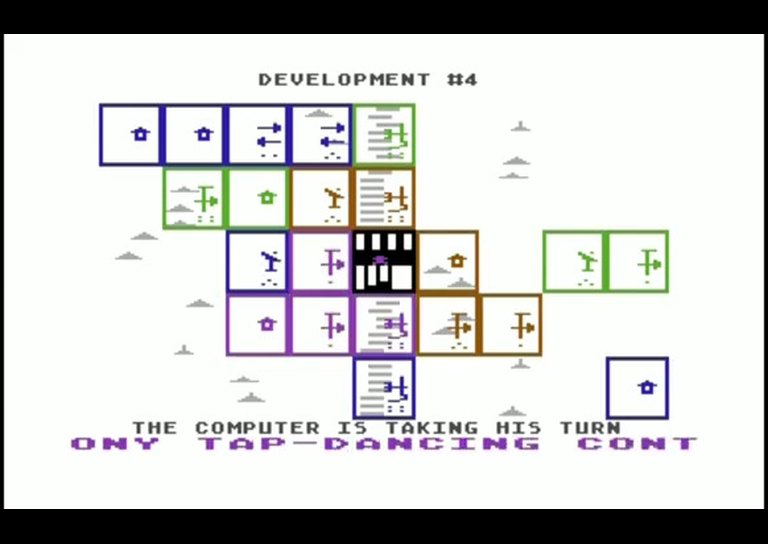
Players assumed the roles of four pioneering colonists transported aboard a Federation transport ship to settle the uncharted wilderness of Planet Irata (a cheeky tribute: "Atari" spelled in reverse). Their objective was to claim land plots, equip robotic beasts of burden known as M.U.L.E.s (Multiple Use Labor Elements), and develop the colony's infrastructure. Far from a brainless race for isolated wealth, the game operated as history's first interactive economic laboratory, weaving Adam Smith's invisible hand with real-time multiplayer tension.
Turning Point One: Planet Irata and the Birth of Multiplayer Economics
The first turning point. In 1983, nearly every prevailing commercial title revolved around shooting invaders or fleeing maze monsters. Danielle Bunten Berry instead seated four human minds around a shared economic ecosystem. Players selected from eight distinct alien species (Humanoids, Flappers, Bonzo-Blasters, Mechisons, Spheroids, etc.), each endowed with contrasting initial bankrolls, labor efficiencies, and market advantages.
The survival of the frontier colony rested on four interconnected resources:
- Food: Essential fuel for colonist survival. Running short penalized the player by drastically truncating their turn timer during the subsequent round.
- Energy: Required to power mining shafts, agricultural equipment, and production plots. Deprived lands stood frozen and yielded zero output.
- Smithore: The raw mineral consumed by the town store to manufacture new M.U.L.E. chassis. If smithore stocks dried up, no further robotic units could be leased.
- Crystite: A volatile luxury mineral found exclusively in mountainous regions, useless for local survival but fetching immense profits from the galactic Federation.
Each turn opened with a land grant lottery, followed by players dashing to the town store to purchase a M.U.L.E., fitting it with appropriate gear (farming, energy, or mining), and leading it out to their claims. Any colonist failing to tether their robot before their timer elapsed suffered the agonizing comedy of watching their expensive investment wander off into the hills.
Turning Point Two: The Paradox of Selfish Monopolies and Colony Collapse
The second turning point: the vulnerability of unbridled greed. Once production settled, the software transitioned into one of the most brilliant competitive arenas ever designed: The Auction Phase. The screen transformed into a vertical bidding pit. Buyers ascended from the lower tier raising purchase bids, while sellers descended from above lowering asking prices. The instant two avatars met on the floor, a deal was sealed.
This dynamic engendered fierce market tactics: a player cornering energy reserves could choke their rivals during winter freezes by demanding extortionate rates. But Bunten Berry incorporated a profound socio-economic failsafe:
This ingenious mechanism forced players into delicate co-opetition: striving to outperform neighbors while ensuring the community remained sufficiently solvent to avoid total collapse. Long before modern game theory became a buzzword in game design, Bunten Berry had realized it seamlessly on home computers.
The algorithmic heartbeat of M.U.L.E. adjusted price elasticity dynamically based on community stockpiles and random frontier calamities:
IF (EVENT == SolarFlare) { PROD_ENERGY *= 2; PROD_CRYSTITE = 0; }
IF (EVENT == PestAttack) { CONSUME_FOOD_SURPLUS(); }
IF (PLAYER_COLLUSION_DETECTED) { SPAWN_PIRATE_SHIP(StealSmithore); }
Solar flares doubled solar energy while wiping out crystal veins, acid storms flooded the river valley, space pirates raided wealthy ore silos, and elusive sightings of the legendary Mountain Wampus offered a frantic cash reward to sharp-eyed explorers.
Turning Point Three: Danielle Bunten Berry and the DNA of Modern Simulation
The third turning point: enduring historical impact. Danielle Bunten Berry (1949–1998) maintained a core philosophy: computers should not isolate individuals in lonely echo chambers, but serve as convivial campfires bringing people together for meaningful human interaction. M.U.L.E. was the triumphant manifestation of that creed.
The game's pedigree across interactive culture is staggering. Will Wright, the legendary architect of SimCity and The Sims, frequently credited M.U.L.E. as the most profound design influence of his entire life. Nintendo's creative luminary Shigeru Miyamoto likewise celebrated M.U.L.E.'s joyful character animation and multiplayer balance as a masterwork of game design. Roy Glover's jaunty ragtime melody for the Commodore 64's SID sound chip remains an immortal anthem that continues to evoke fond smiles among retro gaming historians worldwide.
| Platform Port | Graphics & Color Palette | Audio Hardware & Music | Multiplayer Interaction & Hardware |
|---|---|---|---|
| Commodore 64 (1983/84) | 320x200 Multicolor Mode. Warm land borders and charming M.U.L.E. sprites. | MOS 6581 SID. Roy Glover's iconic ragtime rhythm and expressive auction cues. | 2 or 4-joystick adapter support; legendary tabletop gaming party standard. |
| Atari 8-bit (400/800, 1983) | ANTIC/GTIA Chipset. Native color shading with sharp display definition. | POKEY Audio Chip (4 Voices). Characteristic warm electronic harmonies. | The definitive original experience leveraging the Atari 800's four physical controller ports. |
| NES / Famicom (1990) | Bright console hues with reworked anime-style portraits. | 2A03 APU. Energetic chiptune renditions, though lacking SID bass warmth. | Requires NES Four Score accessory; CPU turns accelerated for console pace. |
Hardware Decision Matrix: How Should You Experience It Today?
| Player Profile | Recommended Platform | Architectural Justification |
|---|---|---|
| Supreme Audio & Iconic SID Atmosphere | Commodore 64 (VICE / TheC64 / Original Silicon) | The warm, syncopated bounce of the MOS 6581 ragtime theme and classic joystick responsiveness. |
| Historical Inception (Pure 1983 Pedigree) | Atari 800 (Altirra / Original Hardware) | Danielle Bunten Berry's direct masterpiece, designed natively around four controller jacks. |
| Living Room Party Tournament | Any Robust Emulator + 4 Modern Gamepads | The unmatched psychological thrill of haggling, colluding, and out-pricing close friends in real time. |
M.U.L.E. demonstrated that computer software could stir the deepest human impulses of ambition, negotiation, and solidarity without relying on explosions or violence. The economic seeds Danielle Bunten Berry planted on Planet Irata remain the bedrock upon which the entire simulation genre was constructed.
Looking back upon M.U.L.E. today leaves two lingering questions:
- Why has modern game design so rarely recaptured that delicate balance where individual victory depends strictly upon the survival of the collective?
- Is there any gaming memory quite as joyous as the breathless laughter that erupts when a stubborn robot katır bolts toward the mountains with five seconds left on the clock?
Verified Sources & Archival Records:
[1] Bunten Berry, D. (1984). The Design Philosophy of M.U.L.E., Computer Gaming World Issue 14, pp. 14-17. Archive: Archive.org CGW Issue 14.
[2] Wright, W. (2003). Influences of M.U.L.E. on Modern Simulation Games, Game Developers Conference Keynote Archives. Source: GDC Vault Archive.
[3] Lemon64 Database (2024). M.U.L.E. Historical Overview & Community Archive. Source: Lemon64 M.U.L.E. Catalog.