



In high-end architectural visualization (ArchViz) and virtual photography, mass-market 3D model repositories often fall short. They frequently flood digital scenes with generic geometry, clinical textures, and sterile CAD topology that fail to convince discerning clients. Established in Berlin by Peter Stulz and his architectural imaging team, XOIO (alongside its community resource hub xoio-air) represents a specialized boutique approach to 3D asset production. By infusing German architectural rigor with sophisticated European interior styling, XOIO bridges the gap between raw computer graphics and editorial interior photography [1][2].
Renowned across the international CGI community for its iconic 2D photographic cutout people, scanned background humans, and turnkey Corona/V-Ray interior furniture, XOIO offers visualization artists production-tested assets tailored specifically for ultra-high-resolution architectural renderings [2][3].
⚡ Data at a Glance

The Boutique ArchViz Philosophy: Why Quality Trumps Quantity
Unlike generic mass aggregators hosting millions of unvetted user uploads, XOIO operates as an elite visualization studio that publishes assets derived directly from real commercial commissions [1][3]. Every piece of furniture, lamp, and decoration is constructed to withstand close-up editorial camera framings:
- Subtle Organic Imperfections: Instead of mathematically rigid, sterile CAD surfaces, XOIO models feature microscopic surface irregularities, realistic cushion compression folds, subtle fabric creases, and soft chamfered edge bevels that catch natural specular highlights [1][4].
- Calibrated Physical Materials: Shaders are pre-configured with precise Index of Refraction (IOR) values, micro-roughness maps, and fabric sheen falloffs calibrated for linear rendering workflows in Chaos Corona and Chaos V-Ray [4].
- Curated European Aesthetics: The model portfolio reflects contemporary Scandinavian, German, and minimalist European architectural trends, making them immediately usable in commercial real estate competitions and marketing imagery without stylistic awkwardness [2][5].
The xoio-air Phenomenon: Pioneering Open ArchViz Resources
Through its community platform xoio-air, the studio established an enduring legacy that transformed architectural visualization pipelines worldwide [2][6]:
- Calibrated Green-Screen Photographic Cutouts: Populating architectural scenes with convincing human figures has historically been a major pain point. XOIO photographed real people against green screens under carefully documented lighting angles (morning sun, sharp overhead midday light, and diffuse overcast daylight), ensuring seamless compositing without unnatural shadow mismatches [2][6].
- Multi-Light Layered PSDs: Specialized cutout packages feature layered Photoshop documents with distinct directional lighting passes, allowing artists to dynamically dial in rim light, key light, and ambient fill to match complex interior environments [2].
- Thematic Seasonal Collections: From winter commuters wearing realistic wool overcoats and holding umbrellas to summer terrace diners, corporate executives, and casual strollers, xoio-air provides diverse human scales with natural postures [2][6].
- Low-to-Mid-Poly 3D Scanned People: To populate large public squares, hotel lobbies, and airport concourses without collapsing viewport framerates, XOIO developed modular 3D scanned characters featuring interchangeable heads and apparel in lightweight OBJ and MAX formats [2][6].
Competitive Comparison: XOIO vs. Leading ArchViz Libraries
| Platform | Core Focus | Human Figures | Shading & Engine Setup | Pricing & Licensing | Ideal Project Type |
|---|---|---|---|---|---|
| XOIO / xoio-air | Boutique European ArchViz, furniture & photographic cutouts | Industry-leading 2D cutouts & scanned 3D crowds | Native Corona & V-Ray Physical Shaders | Free community tier + boutique packs (Royalty-Free) | Luxury residences, public spaces, competition renders |
| Design Connected | Authorized designer furniture & branded luxury pieces | None (furniture & lighting only) | Multi-engine (3ds Max, Blender, Cinema 4D, SketchUp) | Premium pay-per-model ($29 – $99 per asset) | High-end interior architecture & commercial catalogs |
| Evermotion (Archmodels) | Volume asset collections & complete turnkey environments | Rigged 3D characters in dedicated collections | V-Ray, Corona, Mental Ray (legacy) | Collection packs ($120 – $150 per themed volume) | Full-scene construction, rapid commercial ArchViz |
| Dimensiva | Minimalist modern furniture & Scandinavian decor | None | V-Ray, Corona, FBX, OBJ | Freemium ($69/year Pro subscription) | Modern residential interiors & living spaces |
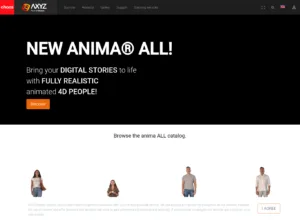
| Axyz Design (Anima) | Photorealistic crowd simulation & 4D digital humans | Specialized animated & rigged 3D crowd actors | Unreal Engine, 3ds Max, Cinema 4D plugins | Commercial software license + character packs | Urban plazas, transit hubs, cinematic flythroughs |
Diagnostic Troubleshooting & Best Practices for XOIO Assets
Symptom: When importing XOIO assets into 3ds Max running ACEScg or custom OCIO color pipelines, dark walnut textures or cognac leather finishes appear crushed, overly dark, or hyper-saturated.
Resolution: XOIO legacy textures were authored under standard Linear Gamma 2.2 / sRGB workflows. In the 3ds Max Asset Tracking / Bitmap loader, ensure diffuse/albedo maps have an explicit Gamma override set to 2.2 (sRGB), while roughness, glossiness, normal, and displacement maps must be loaded strictly with Gamma 1.0 (Raw / Linear Data).
Symptom: Converting an asset from Corona Physical Material to V-Ray Mtl using automated converter scripts results in inverted specular glossiness or blown-out metallic reflections.
Resolution: Modern Corona Physical Material separates Base Roughness and IOR differently from traditional V-Ray GGX BRDF. Verify whether the converter flipped the Glossiness channel. If textures use Roughness, ensure V-Ray Mtl is toggled to Use Roughness mode under the BRDF rollout, and confirm that the Normal map has its Green (Y) channel oriented correctly for your active engine.
Symptom: Distributed render nodes or external cloud farms render XOIO furniture as stark white or diffuse pink due to unresolved local directory paths.
Resolution: Strip absolute local drive letters (e.g., C:XOIOTextures) using 3ds Max’s Asset Tracking dialog (Shift + T) or the automated Relink Bitmaps script. Store all asset textures on a shared UNC network path (RenderServerAssetsTextures) or pack texture maps alongside the master .max project archive.
Pros and Cons
Advantages
- Production-tested photorealism authored by practicing ArchViz veterans.
- Turnkey native shaders for Chaos Corona and Chaos V-Ray.
- World-renowned free xoio-air repository with full commercial rendering rights.
- Photographic 2D cutouts shot with calibrated sun and daylight angles.
- Exceptional Scandinavian and contemporary European interior design aesthetics.
Disadvantages
- Relatively compact catalog compared to multi-million-asset generic marketplaces.
- Primary optimization is for 3ds Max; Blender and Unreal Engine require manual shader setups.
- No dynamic skeletal rigging or motion-captured walk cycles for crowd characters.
Frequently Asked Questions (FAQ)
Verified Sources & References
- XOIO Architectural Visualization Studio Official — Berlin-based studio portfolio, virtual photography methodology, and architectural visualization projects.
- xoio-air: The Free ArchViz Resource Platform — Open-access photographic cutout library, textures, and 3D architectural model archive.
- Ronen Bekerman Architectural Visualization Blog — Studio interviews with XOIO, ArchViz workflows, lighting calibration, and photorealism case studies.
- Chaos Group: Corona & V-Ray Physical Material Standards — Physical material calibration, BRDF models, and interior rendering guidelines.
- CGArchitect: Industry Asset and Cutout Standards — Professional architectural visualization best practices and human scale integration.
- CG Channel: xoio-air Free Community Asset Features — Analysis of xoio-air free photographic cutouts, scanned crowd characters, and production usability.
More platforms like this one are compared in our list of 3D model sites.