




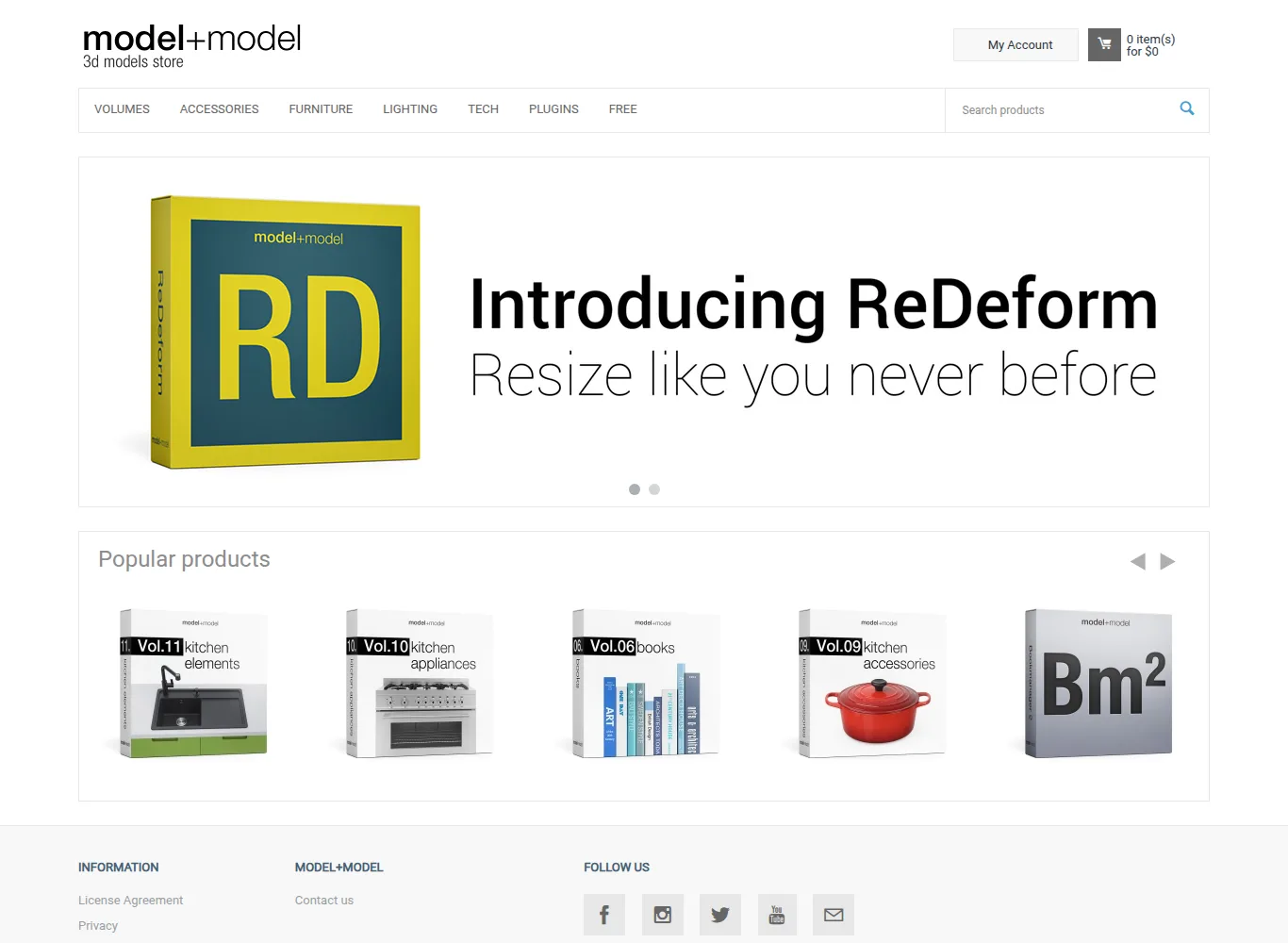
Model+Model is a premier European boutique 3D modeling studio founded in 2009, celebrated globally among architectural visualizers for its ultra-detailed interior accessories, designer lighting fixtures, decorative tableware, and volumetric book collections [1][2]. While mainstream 3D marketplaces focus on large furniture pieces, Model+Model specializes in the essential micro-details and prop arrangements that transform barren, sterile 3D spaces into warm, photorealistic living environments [2][3].
⚡ Platform At a Glance: Model+Model
The Art of Micro-Detailing in Architectural Interiors
In high-end architectural rendering, viewers rarely identify a scene as artificial due to major structural forms like walls, ceilings, or parquet flooring. Instead, the illusion of reality breaks down at the micro-scale: empty bookshelves with mathematically repeated book geometries, perfectly flat wine glasses lacking refractive thickness, or kitchen countertops devoid of authentic everyday utensils [2][3].
Model+Model was established specifically to solve this “staging bottleneck.” Rather than churning out thousands of generic furniture items, the studio focuses on complete, highly articulated accessory volumes that allow visualizers to populate complex interior vignettes within minutes [1][4]:
- Curated Designer Book Collections: Complete library shelves featuring high-resolution scanned covers, authentic page-edge paper textures, randomized spine tilts, and naturally weathered dust jackets.
- Contemporary Lighting Fixtures: Precise digital models of designer pendants, chandeliers, wall sconces, and desk lamps with physically accurate internal bulb emitters, electrical cords, and ceiling mounts [2].
- Tableware and Kitchenware Sets: Fine bone china plates, porcelain bowls with realistic subsurface scattering (SSS), crystal wine glasses, stainless steel cutlery, and linen napkins featuring delicate cloth displacement [4].
- Botanicals and Indoor Greenery: Botanically accurate potted houseplants (Ficus Lyrata, Monstera Deliciosa, Olive trees) with dual-sided translucent leaf shaders and realistic potting soil [3][5].
Turnkey PBR Shader Calibration for Corona and V-Ray
One of Model+Model’s primary advantages over crowd-sourced asset repositories is the rigorous technical consistency of its material setups. In professional production environments, visualizers cannot afford to spend hours fixing inverted normal maps or rebuilding glass absorption curves [2][4]:
- Native Material Assignment: 3ds Max scenes arrive pre-configured with distinct, production-tested shader versions for both Chaos Corona and Chaos V-Ray. Every material utilizes real-world index of refraction (IOR) values, dielectric Fresnel reflections, and energy-conserving diffuse microfacet models.
- Subsurface Scattering (SSS): Porcelain tableware, ceramic mugs, and wax candle decors feature calibrated volumetric absorption and scatter radii that react realistically to direct sunlight or warm interior downlights [2].
- Anisotropic Metal Shaders: Brushed brass, turned aluminum, and satin chrome lighting housings feature directional micro-roughness highlights that catch secondary ambient reflections naturally.
Comparison Matrix: Premier ArchViz Interior Asset Libraries
| Platform / Studio | Catalog Specialization | Shader Readiness | Topology Standard | Delivery Format | Pricing Model |
|---|---|---|---|---|---|
| Model+Model | Accessories, Books, Tableware & Lighting Props | Turnkey native Corona & V-Ray | Sub-D quad-dominant mesh | .MAX, .BLEND, .FBX, .OBJ | Volumes ($35-$60) or single ($6-$15) |
| Design Connected | Licensed Designer Furniture & Brand Seating | Corona, V-Ray, FStorm, Cycles | CAD-accurate polygon topology | .MAX, .3DM, .SKP, .FBX | Per-model (€29 – €59) or subscription |
| Evermotion (Archmodels) | Large Thematic Interior & Exterior Volumes | V-Ray, Corona, Unreal Engine 5 | High-poly production meshes | .MAX, .C4D, .FBX, .OBJ | Thematic volumes (€120/collection) |
| 3DSky (CGMood) | Community-submitted Stock Decor & Furniture | Variable (Author dependent) | Varying (Basic to Pro approved) | Mainly .MAX (V-Ray/Corona) | Subscription credits (~$6 – $7/download) |
| Dimensiva | Modern Nordic & Contemporary Furniture | Corona & V-Ray ready | Clean mid-to-high poly | .MAX, .OBJ, .FBX | Free tiers and PRO subscription ($35/yr) |
Technical Diagnostics: Optimizing ArchViz Prop Workflows
Symptom: Book covers, leather bindings, or carved wooden tableware exhibit harsh, inverted lighting seams or pillow-like swelling under oblique light.
Solution: In 3ds Max, verify that the normal bitmap loader is set to Override Gamma = 1.0 (Linear color space) rather than Automatic (sRGB 2.2). Inside the CoronaNormal or VRayNormalMap node, ensure that the flip green channel (Y-axis) matches your host renderer’s tangent space requirements.
Symptom: Instancing multiple Model+Model book sets across extensive custom library cabinetry causes 3ds Max viewport FPS to collapse and inflates `.max` file sizes over 500 MB.
Solution: Convert complete shelf arrangements into CoronaProxy or VRayProxy files with Point Cloud or Bounding Box display enabled in the viewport. Retain original materials within a single Multi/Sub-Object material to eliminate redundant unique draw calls.
Symptom: Wine glasses or decanters cast dense, pitch-black shadows onto tablecloths, ruining the delicacy of high-end dining renderings.
Solution: In V-Ray Mtl, enable Affect Shadows in the Refraction parameter rollout. In Corona Mtl, ensure Thin (no absorption) is disabled for solid crystal glassware, set volumetric absorption distance accurately (e.g., 50–100 mm), and verify that ray bounce depth (Max Ray Depth) is set to at least 12 in render settings.
Pros & Cons
✅ Strengths
- Exceptional micro-detailing on books, tableware, lighting, and decorative accessories.
- Turnkey Corona Renderer and Chaos V-Ray material setups with calibrated PBR values.
- Clean, subdivision-ready quad topology with real-world metric scale.
- Cohesive stylistic aesthetic that elevates luxury interior staging immediately.
- Thematic volume bundles offer outstanding value compared to individual item purchases.
⚠️ Considerations
- Catalog focuses strictly on props and decor rather than large architectural structures.
- Primary native optimizations target 3ds Max; Blender and C4D users must use FBX/OBJ setups.
- High polygonal density requires sensible proxy management in massive scenes.
Frequently Asked Questions (FAQ)
Verified References & Citations
- Model+Model Official Portal: Architectural Visualization Asset Collections & Studio History
- CGarchitect Feature: Staging Interior Renderings with High-End 3D Accessories
- Chaos Corona Documentation: Best Practices for Complex Interior Material Shading & Proxies
- Model+Model Technical FAQ: Formats, Licensing & Renderer Support Guidelines
- Ronen Bekerman Architectural Visualization Blog: The Micro-Details of Photorealism
More platforms like this one are compared in our list of 3D model sites.