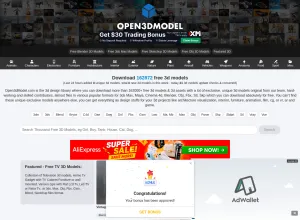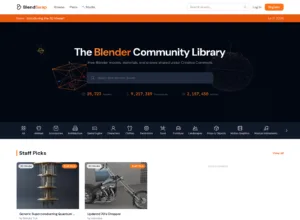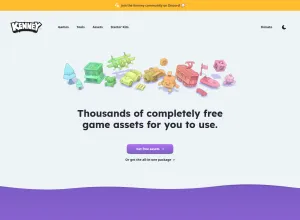





During the early golden era of consumer virtual reality (VR), mobile augmented reality (ARCore), and WebXR, developers faced a critical bottleneck: locating lightweight, highly optimized low-polygon 3D assets capable of maintaining 90 frames per second on mobile chipsets. To solve this ecosystem deficit, Google launched Google Poly in November 2017 [1][2]. Designed as a frictionless, cloud-integrated repository directly connected to Google Tilt Brush and Google Blocks, Poly quickly became the favorite open-source model hub for indie developers and XR visionaries [1][3].
Although Google permanently decommissioned Poly on June 30, 2021 as part of an internal shift in spatial computing priorities, its open-source legacy profoundly transformed the 3D industry. It established Khronos Group’s glTF/GLB format as the universal standard for web 3D and gave rise to vital modern successors like Poly Pizza and Icosa Gallery [2][4].
Data at a Glance
Why Google Poly Was Revolutionary
Google Poly was not simply another static repository; it operated as an integrated real-time pipeline bridging immersive VR art software directly to web browsers and mobile game engines [1][2]:
- Direct In-Headset VR Publishing: Artists sculpting in Google Blocks or painting room-scale illustrations in Google Tilt Brush could publish their work to Poly with a single controller tap, or pull community assets into their active scene as reference props [1][3].
- Championing the glTF Transmission Format: Collaborating with Khronos Group, Google utilized Poly as the primary real-world testbed for glTF 2.0. By packaging PBR materials, mesh geometry, and animations into lightweight, binary
.glbfiles, Poly demonstrated that complex 3D scenes could load instantly over mobile 4G networks without plugins [4]. - The Poly REST API: Web and game developers could dynamically fetch 3D models at runtime using keyword queries directly via Google’s API, enabling procedural virtual worlds and cloud-streamed educational apps [2][5].
The Sunset & How the Community Rescued the Archive
When Google announced the impending termination of Poly in December 2020, open-source developers, digital archivists, and XR studios mobilized to prevent the loss of hundreds of thousands of Creative Commons assets [1][3]:
- The Sketchfab Migration Partnership: Google collaborated with Sketchfab to allow Poly account holders to migrate their portfolios and CC-BY collections directly to Sketchfab with one click, preserving credits and metadata [1][5].
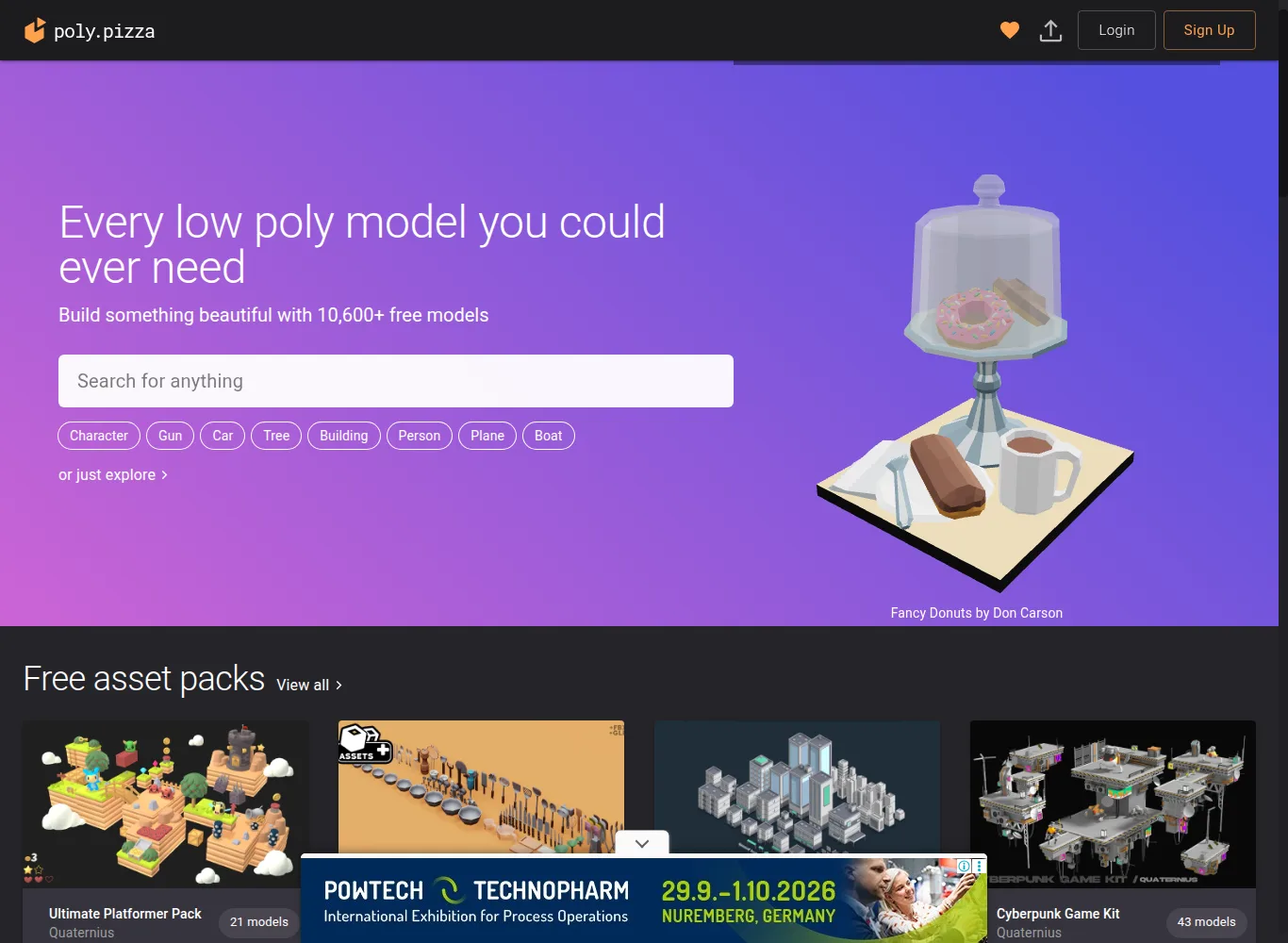
- Poly Pizza: Built by independent developer Alejandro Romero, Poly Pizza emerged as the spiritual heir to Google Poly. It archived thousands of salvaged low-poly assets and continues to serve as a fast, free repository for low-poly game developers [3].
- Icosa Gallery & Open Brush: Following Google’s decision to open-source Tilt Brush as Open Brush, the community established Icosa Gallery to provide dedicated hosting for spatial VR art and interactive brush sketches [2].
Competitive Comparison: Google Poly Successors & Modern Alternatives
| Platform | Primary Role | Native Formats | Licensing Standard | In-Browser WebXR Preview | Best Application |
|---|---|---|---|---|---|
| Poly Pizza | Direct spiritual successor to Google Poly | .GLB, .OBJ, .glTF | 100% Free CC0 / CC-BY | Instant 3D browser inspector | Low-poly game jams, WebGL apps, rapid prototypes |
| Icosa Gallery | Tilt Brush & Open Brush spatial art gallery | Tilt Brush (.tilt), GLB, OBJ | Creative Commons & Open Source | WebXR immersive headset playback | VR spatial painting, virtual art exhibitions |
| Sketchfab | Industry-standard 3D web platform | glTF, USDZ, FBX, OBJ, BLEND | CC0, CC-BY & Commercial Store | Gold-standard WebGL real-time viewer | Professional portfolio display, client review, store |
| Quaternius | Curated stylized low-poly game asset kits | FBX, OBJ, GLTF, BLEND | 100% CC0 Public Domain | Pre-rendered turntable previews | Modular game development, commercial indie titles |
| Kenney.nl | Comprehensive game development asset bundles | OBJ, GLTF, FBX, 2D sprites | 100% CC0 Public Domain | Direct zip download bundles | Prototyping, educational game design classes |
Diagnostic Troubleshooting: Working with Legacy Poly Assets
Symptom: Importing an archived Google Blocks OBJ model into Unity, Unreal Engine, or Godot results in a stark white, untextured object with missing colors.
Resolution: Google Blocks did not author texture image maps; instead, it baked diffuse colors directly into the mesh geometry as Vertex Colors. In your game engine shader, ensure the material shader is set to multiply or read the mesh’s COLOR / Vertex Color attribute rather than expecting an albedo texture map. In Blender, verify vertex colors under Mesh Data Properties > Color Attributes.
Symptom: Opening a Tilt Brush GLB export in standard 3ds Max or Maya displays flat, unlit ribbon geometry without the characteristic neon glow, smoke, or fire effects seen in VR.
Resolution: Tilt Brush brush effects rely on custom GLSL vertex shaders that manipulate alpha transparency, scrolling UVs, and additive blending. To render them accurately outside VR, use the official open-source Open Brush Toolkit for Unity or download community-authored Blender shader node groups that recreate the specialized ribbon shaders.
Symptom: Legacy Three.js, A-Frame, or ARCore mobile applications fail with HTTP 404 or connection refused errors when attempting to load models at runtime.
Resolution: Google’s Poly REST API was permanently taken offline. Re-route your network requests to the community-maintained Poly Pizza API (api.poly.pizza) or host your acquired GLB archives on an Amazon S3 / Cloudflare R2 bucket with proper CORS headers enabled for WebGL access.
Pros and Cons
Historical Strengths
- Pioneered the widespread adoption of the open-standard glTF/GLB web 3D format.
- Seamless direct publishing from Tilt Brush and Blocks inside virtual reality.
- Entire catalog was freely accessible under permissive Creative Commons licenses.
- Ultra-lightweight models tailored for mobile hardware and early WebXR experiences.
- Inspired vibrant community-led archival initiatives like Poly Pizza and Icosa.
Platform Limitations
- Permanently taken offline by Google on June 30, 2021; official REST API is defunct.
- Focused strictly on low-poly art; unsuitable for photorealistic or architectural visualization.
- Legacy VR assets often require custom vertex color shaders in modern game engines.
Frequently Asked Questions (FAQ)
Verified Sources & References
- Google Poly Official Platform Notice — Official announcement regarding the platform shutdown and data export guidance.
- TechCrunch: Google Launches Poly for 3D and VR Objects — Original 2017 launch coverage, Tilt Brush integration, and mobile AR strategy.
- Poly Pizza: The Modern Successor to Google Poly — Community-maintained open repository of low-poly 3D models with instant GLB downloads.
- Khronos Group: glTF The 3D Transmission Format — Official technical specifications for glTF and GLB as the web-standard 3D format.
- Sketchfab Community: Welcoming Google Poly Community & Archival Project — Details on the official migration of Poly assets and authors to Sketchfab.
Google Poly closed on 30 June 2021, leaving GLB archives such as Poly Pizza; the cultural heritage section gathers those successor archives.