




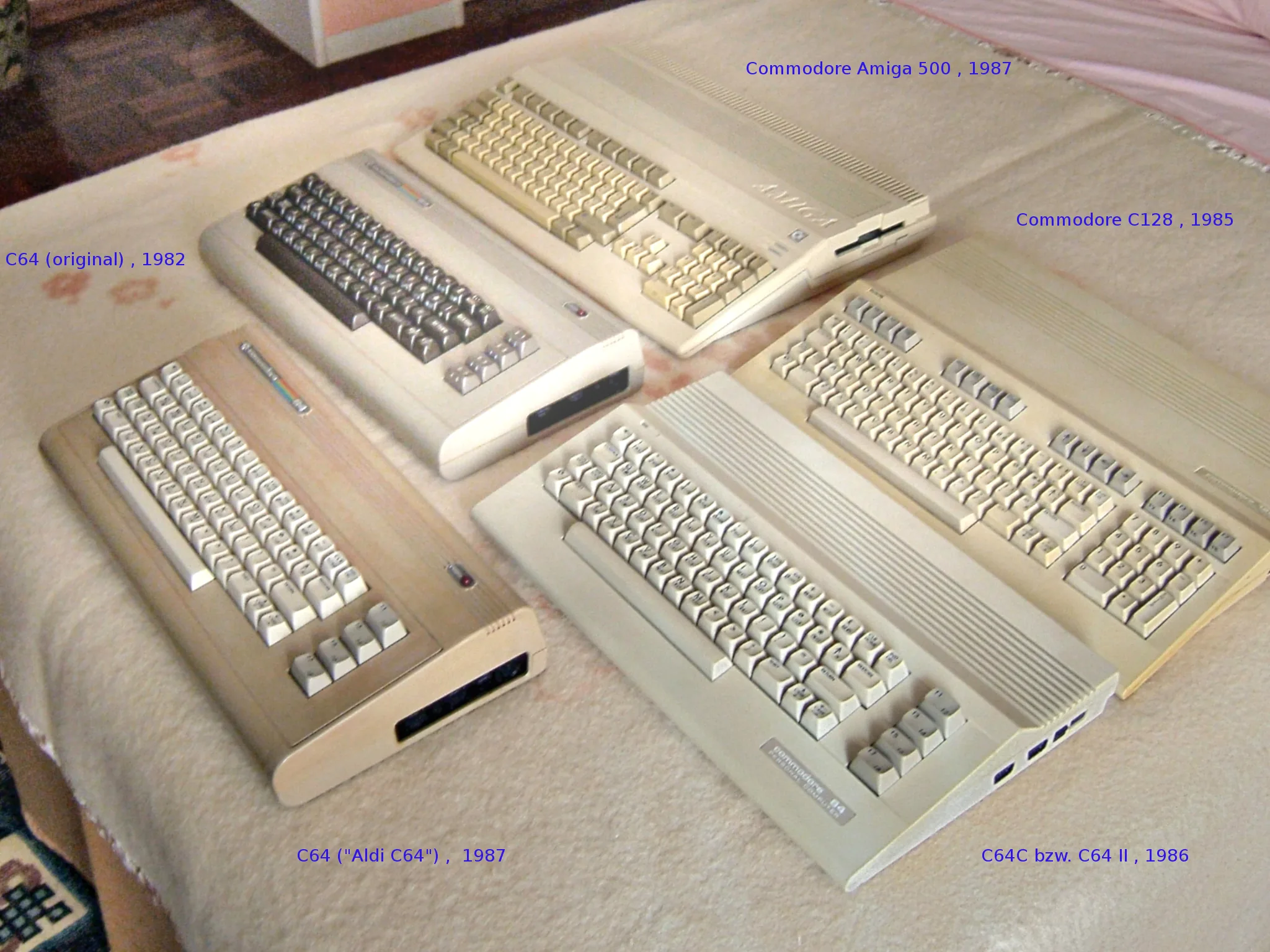
November 14, 1997. Cologne, Germany. The Computer ’97 expo. With formal licensing from Amiga International, Cloanto launched the premiere release of Amiga Forever on CD-ROM: a native Windows frontend, tailored UAE builds for Windows, MS-DOS, Classic Mac OS, and Linux, alongside authentic Kickstart ROM images and Workbench disks.[11]
Today is that exact date. Twenty-nine years have elapsed, yet the fundamental question remains unchanged: Where does this digital file originate, and who granted legal permission?
The true value of that historic CD-ROM did not stem from raw byte dumps. Its worth resided in the licensing covenant accompanying the physical media: on October 7, 1997, Amiga International formally authorized Cloanto to distribute AmigaOS system assets alongside software emulators.[11] All modern retro computing preservation revolves around this distinction. Files can be cloned effortlessly; legal authorization cannot.
This technical guide evaluates legitimate pathways accessing MS-DOS, Commodore Amiga, and Commodore 64 software libraries. We contrast repository scopes, subscription costs, account dependencies, and practical copyright boundaries. DigiLiner hosts zero ROM images, floppy disk containers, ZIP archives, or game binaries. Every link directs to verified rights holders, national digital libraries, or authorized open-source preservation repositories; our server provides no direct file downloads.
First Turning Point: “Abandonware” Is Not a Recognized Legal Category
The term “abandonware” was coined in late 1996 by webmaster Peter Ringering. By February 1997, enthusiasts formed the web-linked Abandonware Ring. In October 1997, the Interactive Digital Software Association (IDSA, now the ESA) issued formal cease-and-desist notifications, leading to the abrupt shuttering of participating sites.[6]
The timing is historically telling: precisely as Amiga Forever reached commercial retail shelves, the software publishing industry was actively mobilizing against the notion of unowned digital software.
The legal reality remains identical today. United States copyright jurisprudence recognizes no legal doctrine titled “abandonware”; no software published after 1964 has entered the public domain merely due to copyright expiration.[6] The commercial absence of a title does not forfeit underlying intellectual property rights. Even when original corporate entities dissolve through bankruptcy, assets transfer to holding entities, estate administrators, or investment trusts—frequently without public fanfare.
Consequently, the colloquial claim that a vintage game has “no owner” is legally groundless. In practice, rights holders simply remain untraced or choose not to litigate. The legal boundary between an unasserted claim and legitimate authorization determines the survival of any digital preservation project.
Data at a Glance: Legal Digital Distribution in 2026
Lawful access to retro gaming does not rely on a single gateway; it operates across four distinct legal bases: publisher licenses, shareware/freeware distribution rights, statutory library exemptions for institutions, and cleanroom firmware. WHDLoad and emulators are tools for using these bases, not sources of game licenses.[1][6][13]
| Platform Scope | MS-DOS (1981–1994), Commodore Amiga (1985–1996), Commodore 64 (1982–1994) |
|---|---|
| Legal Authorization Modes | Rights-holder licensing, shareware distribution permissions, preservation exemptions, cleanroom ROMs |
| Premier Browser Archive | Internet Archive MS-DOS collection[2]; encompassing nearly 2,400 titles since early 2015[3] |
| Repository Terms of Use | Strictly restricted to “research and educational purposes”[5] |
| Commercial Digital Catalogs | GOG.com (established 2008, DRM-free)[7]; Steam legacy publisher releases |
| Authorized System ROMs | Cloanto Amiga Forever (1997), C64 Forever 11[11][12] |
| Open-Source Firmware | MEGA65 Open ROMs; cleanroom KERNAL and BASIC for C64/C65/C128[13] |
| Standard Emulation Engines | DOSBox, VICE 3.10 (GPL), WinUAE, and FS-UAE[14] |
| DigiLiner Editorial Policy | Critical evaluation and navigational mapping; zero hosting of copyrighted binary files |
| Legal Jurisdiction | Varies by national territory; this technical analysis does not constitute formal legal advice |
Three Platforms, Three Independent Authorization Chains
MS-DOS: The Durable Heritage of Shareware Distribution
In the MS-DOS ecosystem, the legal foundation was largely shaped by the shareware boom. Studios like Apogee Software and id Software distributed initial game episodes freely with explicit public redistribution permissions; the accessible shareware episode operated as an organic demonstration for the registered commercial software.[24] Because of these early licenses, a vast corpus of DOS software remains legally distributable without fee: the introductory episodes of Commander Keen, Duke Nukem I, and Wolfenstein 3D.
The second primary source is the Internet Archive. On December 23, 2014, the Archive deployed browser-embedded DOSBox emulation, rendering historical PC games directly playable over HTTP.[4] By January 2015, major reporting highlighted this collection as encompassing nearly 2,400 playable MS-DOS titles.[3] While the catalog has expanded substantially, the legal operative condition is vital: the Archive’s terms restrict use to “research and educational purposes.”[5] It functions as a public research library, not an unencumbered software clearinghouse.
The third conduit is commercial retail. GOG was established in Warsaw on February 22, 2008, curating vintage software bundled without digital rights management (DRM) inside preconfigured DOSBox or ScummVM wrappers.[7] In November 2024, GOG launched its formal Preservation Program to ensure classic titles remain operable on contemporary operating systems, initiating the program with over 100 verified entries.[8][9] This offers the cleanest resolution to legitimate access: you purchase the title, and the binary installer remains locally under your perpetual ownership.
The fourth resource is eXoDOS. This archival endeavor unifies DOS gaming under a LaunchBox frontend structure with standardized metadata, distributing its packages via the Internet Archive.[23] The legal standing varies title by title: the compilation does not represent a single unified release license; each included binary answers to its specific rights lineage.
Amiga: Without Kickstart Firmware, the Hardware Remains Dormant
On the Commodore Amiga architecture, legal complications emerge prior to loading any game executable. Kickstart represents the Amiga system ROM and remains under active international copyright. Cloanto secured formal distribution rights in 1997 and subsequently assumed code rights and copyrights through AmigaOS 3.x in 2012.[11] Therefore, Amiga Forever represents the most direct authorized avenue for verified system ROMs: packaging versions 0.7 through 3.1 alongside Workbench disk sets and optimized UAE/Fellow emulators.[11]
A secondary commercial distribution channel opened on September 5, 2014, when GOG secured an Amiga distribution agreement for the classic Cinemaware catalog, commencing with Defender of the Crown. This deployment relied on Cinemaware’s custom emulation engine.[10] Consequently, while the entire Amiga software corpus is not commercially accessible, verified subsets can be legally obtained.
It is crucial not to conflate a technical utility with an intellectual property license: WHDLoad is neither a licensing framework nor a game distribution platform. Developed by Bert Jahn, WHDLoad is an installation subsystem and runtime loader designed to install floppy-based Amiga games onto hard drive partitions, bypassing floppy drive timing bottlenecks and swap prompts.[26] The packages distributed by WHDLoad (“Slaves”) contain zero copyrighted game binaries; they are strictly installation and patching routines. Executing a game requires the user to supply their own original floppies or verified legitimate dumps, alongside an officially licensed Kickstart ROM. Pre-packaged “WHDLoad game sets” circulated across the web constitute unauthorized third-party redistribution unless explicitly authorized by the original copyright holders.[26] On the open-source front, the AROS Research Operating System provides an Amiga-compatible environment with its own open-source ROM; it reduces Kickstart dependency but is not compatible with every commercial Amiga game and does not grant game licenses.[27]
Commodore 64: Three Silicon ROM Chips and a Cleanroom Engineering Response
The Commodore 64 requires three discrete ROM chips to achieve system initialization: an 8 KB KERNAL ROM, an 8 KB BASIC ROM, and a 4 KB character generator; the Commodore 1541 floppy drive operates its own independent DOS firmware.[25] Without valid dumps of these chips, neither VICE emulation nor authentic hardware can execute software.
Cloanto’s C64 Forever product packages licensed Commodore ROM binaries through the same continuous authorization chain. Version 11 features a gratis Express tier alongside paid commercial tiers starting at $9.95, accompanied by an extensive database indexing over 5,000 C64 titles in the RP9 container format.[12]
The alternative path relies entirely on open-source engineering: the MEGA65 project’s Open ROMs initiative has developed cleanroom KERNAL and BASIC firmware for the C64, C65, and C128 from scratch under free licenses (GPL/LGPL). The project’s stated objective is providing fully distributable, legal firmware while upholding original intellectual property boundaries; compiled binaries are publicly available in their code repository.[13]

Comparative Repository Matrix
The matrix below contrasts the operational realities encountered across vintage software repositories. The “Risks” column highlights practical pitfalls rather than abstract statutory judgments.
| Source Entity | Target Platforms | Legal Foundation | Cost & Registration | Supplied Deliverable | Coverage Depth | Practical Risks |
|---|---|---|---|---|---|---|
| Internet Archive – MS-DOS | DOS | Statutory library archive; terms restricted to research/study | Free; no registration needed | Browser-streamed DOSBox runtime, metadata scans | Extensive DOS catalog | Streaming only; subject to rights holder takedowns |
| GOG.com | DOS, Amiga (Cinemaware), PC | Direct rights holder licensing agreements | Paid; account required | DRM-free standalone offline installers with DOSBox/ScummVM | Strong DOS curation; selective Amiga titles | Regional pricing; periodic title delistings |
| Steam | DOS / PC legacy reissues | Publisher distribution contract | Paid; client and account required | Commercial re-releases, cloud synchronization, patches | Selective DOS/PC classics | Client DRM dependency, regional locks, catalog churn |
| eXoDOS | DOS | Community preservation archive; hosted via Internet Archive | Free | Comprehensive LaunchBox metadata and emulation bundles | Exhaustive DOS catalog | Legal standing varies per individual game title |
| Amiga Forever (Cloanto) | Amiga | Officially licensed Kickstart and Workbench copyrights | Paid; tiered by edition | Licensed ROM binaries, Workbench images, emulator players | Comprehensive Amiga OS | Personal end-user license; no rights to redistribute ROMs |
| C64 Forever (Cloanto) | C64 | Direct historical licensing lineage | Free Express / $9.95+ Plus tier | Licensed C64 ROMs, 5,000+ title database, RP9 runtime | C64 hardware suite | Extended features restricted to paid tier; personal license |
| MEGA65 Open ROMs | C64, C65, C128 | Cleanroom reimplementation; open source GPL/LGPL | Free | Independently written KERNAL and BASIC firmware images | C64/C65/C128 architecture | Firmware layer only; partial edge-case game incompatibility |
| Shareware Author Releases | DOS, Amiga, C64 | Express public distribution permission granted by author | Free | Original episodic binaries, digital manuals, select source code | Variable across developers | Confusion between free introductory shareware and full versions |
| Unauthorized ROM Repositories | All systems | None or disputed assertions | Free | Unsanctioned binary archives of commercial titles | Extensive | DMCA enforcement, malware injection risks, domain seizures |
Second Turning Point: A Preservation Archive Is Not a Commercial Storefront
The most pervasive misconception in vintage computing is equating “accessible in a digital archive” with “legally entitled to extract and hoard.” The terms governing the Internet Archive state unambiguously that access is granted strictly for “research and educational purposes.”[5] While this provides broad leeway for interactive study within a web browser, it confers no automatic right to pull binaries down into an unrestricted personal collection.
Developments in 2024 reinforced this boundary. In the United States, the Library of Congress concluded its ninth triennial DMCA Section 1201 rulemaking proceeding on October 28, 2024.[15] While various preservation exemptions were renewed, the joint petition submitted by the Video Game History Foundation and the Software Preservation Network—seeking an exemption to grant researchers remote access to out-of-print titles—was formally rejected.[16] The law did not relax; it underscored the divide between physical preservation and off-premises public transmission.
The urgency behind this legal tension is underscored by data: a comprehensive 2023 study by the Video Game History Foundation discovered that 87% of classic video games released prior to 2010 in the United States are critically endangered or out of commercial circulation.[22] Libraries strive to safeguard this cultural heritage, yet their operational rules differ fundamentally from storefronts. A library permits on-site inspection; a vendor conveys a personal usage title; an unsanctioned repository offers neither legal standing nor guarantee of authenticity.
📌 Core Rule: Archival Access Is Not Redistribution License
If a platform enables direct file downloads from its servers, always examine its written terms of service before archiving. Clauses citing research or personal-study exceptions provide access for consumption, not an open redistribution license.
Step-by-Step Methodology for Lawful Digital Acquisition
Regardless of your target computing architecture, adhere to this rigorous sequence. The objective is not rapid acquisition, but establishing an unbroken chain of authorization.
- Define the Platform and Title Revision. A single game released across MS-DOS, Commodore Amiga, and Commodore 64 often exists under three distinct copyright ownership agreements. Determine precisely which release you are handling.
- Audit Commercial Channels First. Verify whether the title exists on GOG, Steam, or direct publisher storefronts. If present, purchase the release: you secure a lawful, DRM-free binary designed to operate offline perpetually.[7][8]
- Review Public Archive Licensing Terms. If inspecting a title through the Internet Archive, verify its metadata card and publisher notes. Respect the statutory boundary that browser streaming operates under research and educational provisions.[5]
- Dump Your Personal Physical Media. If you own original 5.25″ or 3.5″ floppy disks or ROM cartridges, reading your own physical media for private backup is recognized across multiple jurisdictions—including Article 5(2) of EU Directive 2009/24/EC and Section 117 of Title 17 in the United States Code.[17][19] Compute and log cryptographic hashes (such as SHA-1) for future integrity verification.
- Obtain Firmware Through Authorized or Cleanroom Avenues. For Amiga emulation, rely on Cloanto’s Amiga Forever for genuine Kickstart images, or use AROS for open-source compatibility. For Commodore 64, use C64 Forever or install MEGA65 Open ROMs.[11][12][13]
- Maintain Archival Documentation. Keep a systematic log documenting retrieval dates, source providers, invoice numbers, or licensing notes for every system image and software binary. This record constitutes your primary defense in any intellectual property inquiry.
Decision Matrix: Aligning User Profiles with Distribution Sources
| User Profile | Recommended First Resource | Core Operational Benefit | Critical Practice to Avoid |
|---|---|---|---|
| “I simply want to experience the game” | Audit GOG or Steam; alternatively test in-browser via Internet Archive | Instant execution, zero complex setup, clean offline installers[3][7] | Downloading bulk packs from suspicious ROM aggregation sites |
| “Preserving an authentic vintage hardware collection” | Dump your own physical disks; acquire Cloanto or Open ROMs for firmware | Personal backup copies enjoy strong statutory protection[17][19] | Re-uploading personal dumps to public file-sharing clouds or forums |
| “Independent developer / commercial publisher” | Trace original rights holders, secure written licensing, utilize cleanroom code | Commercial re-releases require a complete, unbroken legal chain[7][13] | Assuming a defunct development studio forfeits copyright ownership |
| “I possess raw ROM dumps; what are my rights?” | Store strictly as a private personal archive; verify cryptographic checksums | Possession of media confers backup rights, not redistribution rights[6][17] | Reselling dumped images, publishing torrents, or public web hosting |
Legal Framework: Jurisdictional Differences in Software Preservation
Vintage software jurisprudence cannot be summarized under a single statute; statutory treatment bifurcates across three operational acts: generating private backups, circumventing digital locks, and public redistribution. Each jurisdiction approaches these acts with distinct legal principles.
The European Union. Directive 2009/24/EC on the legal protection of computer programs explicitly permits legitimate software owners to generate archival backup copies necessary for software use (Article 5(2)) and grants circumscribed decompilation rights to achieve interoperability (Article 6).[17] In the landmark 2012 UsedSoft ruling (Case C-128/11), the Court of Justice of the European Union held that the author’s distribution right is exhausted upon the initial authorized sale of software, even when delivered digitally.[18] While this validated the resale of legitimate software licenses, it confers no entitlement to duplicate and broadcast copies publicly.
The United States. Section 117 of Title 17 in the United States Code permits the owner of a computer program copy to produce an archival backup strictly for operational or preservation purposes.[19] However, Section 1201 of the Digital Millennium Copyright Act (DMCA) outlaws circumventing technological protection measures (TPMs) without specific administrative exemptions. In the October 2024 rulemaking conclusion, federal regulators rejected proposed rules that would have allowed libraries to stream preserved games to remote researchers over computer networks.[15][16]
International Harmonization. Intellectual property conventions like the Berne Convention and TRIPS require member nations to extend copyright protection across member borders. Consequently, domestic statutes—such as Law No. 5846 in Turkey—protect software as literary/scientific works without recognizing any statutory “abandonware” exemption.[20][21]
Legal Disclaimer: This analytical dossier is provided strictly for educational and technical informational purposes and does not constitute formal legal counsel. For specific commercial licensing, retro publishing, or jurisdiction-specific compliance, consult a qualified intellectual property attorney. Legal frameworks evolve; verify the current status of linked primary sources.
Frequently Asked Questions
Is downloading “abandonware” legally permissible?
No. Abandonware is an informal community phrase without legal statutory validity. Even if a title is no longer marketed, copyright protection endures. Dissolved publishers transfer ownership to liquidation entities, estate trusts, or corporate successors.[6]
Can I lawfully download MS-DOS software from the Internet Archive?
The Internet Archive serves titles via browser emulation under statutory research and education frameworks.[5] This does not constitute an express grant permitting users to extract binaries into permanent private storage.
Can Commodore Amiga software run without proprietary Kickstart ROMs?
Most commercial Amiga software strictly requires Kickstart firmware. Cloanto provides legally authorized ROM images via Amiga Forever, while AROS offers an open-source Amiga-compatible environment with its own ROM; it is not compatible with every classic game and does not replace licensed Kickstart setups in every case.[11][27]
Are Commodore 64 system ROMs freely distributable today?
Original Commodore 64 KERNAL and BASIC ROMs remain proprietary assets. However, the open-source MEGA65 Open ROMs initiative distributes cleanroom, independently engineered firmware images under GPL/LGPL licenses.[13]
Am I permitted to dump my personal vintage floppy disks and share them?
You may generate private archival backups of software you legally possess under EU Directive 2009/24/EC and US 17 U.S.C. §117, but you may not share, broadcast, or redistribute those disk images publicly.[17][19]
May I permanently store games acquired from GOG.com?
Yes. GOG provides DRM-free offline setup binaries that you are entitled to store across your personal hardware for offline use. Public distribution, resale of duplicate copies, or cloud broadcasting violates licensing agreements.[7][8]
Closing Perspective
Back in November 1997, the true value of that Amiga Forever CD-ROM did not stem from raw byte dumps; it was rooted in the signed licensing agreement accompanying the disc. Today in 2026, the only difference is how easily permissions can be audited: the copyright holder’s portal, the archive’s terms of service, and the open-source repository’s license file are all accessible in seconds.
Finding a binary file online is trivial. The authentic engineering discipline lies in verifying the legal foundation beneath that file.
Who holds the copyright to the vintage disk on your desk? And does your local jurisdiction recognize the license that accompanies it?
References
- Internet Archive – About the Organization
- Wikipedia – Internet Archive (Founded May 10, 1996)
- Washington Post, Jan 5, 2015 – “You can now play nearly 2,400 MS-DOS video games in your browser”
- Jason Scott, “Each New Boot a Miracle”, Dec 23, 2014
- Internet Archive – Terms of Use (“research and educational purposes”)
- Wikipedia – Abandonware (Term Origin, IDSA Notices, Statutory Realities)
- Wikipedia – GOG.com (2008 Launch, DRM-Free Model, DOSBox/ScummVM Bundling)
- GOG – Preservation Program Announcement, Nov 13, 2024
- The Verge, Nov 13, 2024 – GOG’s Classic Preservation Program
- MCV – Cinemaware / GOG Amiga Distribution Agreement, Sep 5, 2014
- Wikipedia – Amiga Forever (Nov 14, 1997, Computer ’97 Cologne; 2012 Rights Acquisition)
- C64 Forever – Official Portal (Version 11, Express Tier, 5,000+ Database)
- MEGA65 Open ROMs – Cleanroom C64/C65/C128 Firmware (GPL/LGPL)
- VICE – Official Emulator Repository (Version 3.10)
- U.S. Copyright Office – 2024 Section 1201 Rulemaking Proceedings
- GamesRadar+, Oct 25, 2024 – Denial of Remote Access Exemption for Game Preservation
- Directive 2009/24/EC – Legal Protection of Computer Programs (Articles 5(2) and 6)
- CJEU C-128/11 UsedSoft – Resale of Downloaded Software Licenses, Jul 3, 2012
- 17 U.S.C. §117 – Limitations on Exclusive Rights: Computer Programs
- Law No. 5846 on Intellectual and Artistic Works (Turkey)
- Turkish Wikipedia – Abandonware Legal Overview
- GamesIndustry.biz, Jul 10, 2023 – VGHF Study: 87% of Classic Games Critically Endangered
- Internet Archive – eXoDOS Preservation Packages
- Wikipedia – Shareware (Distribution Models and Licensing History)
- Wikipedia – Commodore 64 Architecture and ROM Configuration
- WHDLoad – Bert Jahn’s Amiga Hard Disk Installation Subsystem (installer scripts only; does not distribute copyrighted game files or ROMs)
- AROS Research Operating System – Open-Source AmigaOS Reimplementation