





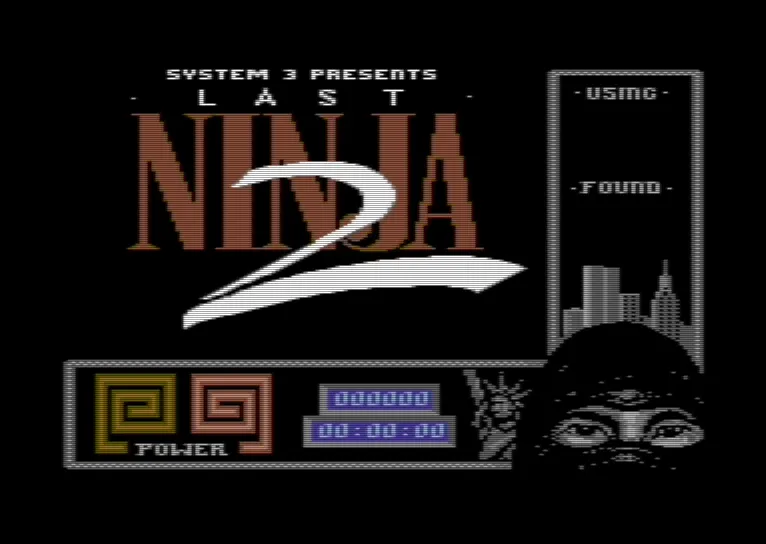
// SYSTEM DOSSIER: THE LAST NINJA 2 (1988)
| Developer / Publisher | System 3 Software Ltd. / Activision (North America) |
|---|---|
| Lead Design & Producer | Mark Cale (Design), John Twiddy (C64 Engine Architect) |
| Visual Art & Animation | Hugh Riley (Isometric Environment & Character Art) |
| Original Music (SID) | Matt Gray (Legendary 6581 SID Sound Engine) |
| Target Platforms | Commodore 64 (Original), Amiga, Atari ST, MS-DOS, ZX Spectrum |
| Genre & Perspective | Isometric Combat & Action-Adventure (Flip-Screen Isometric) |
| Commercial Milestone | Over 1,000,000 units sold in Europe; Golden Joystick 1988 Game of the Year |
Autumn 1988. London and New York. When a Commodore 64 gamer pushed down the PLAY key on their Datassette tape drive, the atmosphere of the room shifted immediately. Across vibrant, multicolored loading stripes on the screen, Matt Gray's heavy slap-bass lines, resonant analog synthesizers, and sharp percussive beats emerged from the MOS Technology 6581 SID chip. This was no ordinary loading screen; it was an overture to an 8-bit shadow operation pushing silicon to its absolute limits.
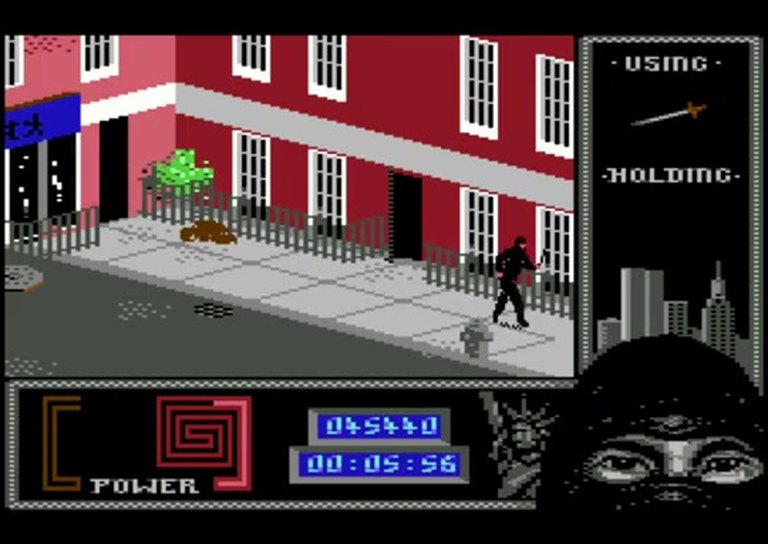
While the original The Last Ninja captivated audiences in 1987 across the mystical temples of the island of Lin Fen, its sequel, The Last Ninja 2: Back with a Vengeance, dared an unprecedented leap in video game history: our protagonist, the last ninja Armakuni, was hurled through a mysterious time tear straight into the foggy, rain-slicked, neon-lit streets of 1980s New York City.
Turning Point One: The Daring Leap from Feodal Temples to 1988 Manhattan
The first turning point. Most sequels choose safe iteration: more temples, more samurai, more shrines. Mark Cale and System 3 took the opposite gamble. After Armakuni defeated his nemesis Kunitoki, a dark vortex transported him into late 20th-century Manhattan. Kunitoki had reincarnated as a corporate crime mogul commanding private armies, security guards, and modern surveillance.
The game's 7-tier operational roadmap served as a survival manual for an ancient warrior inside a modern concrete jungle:
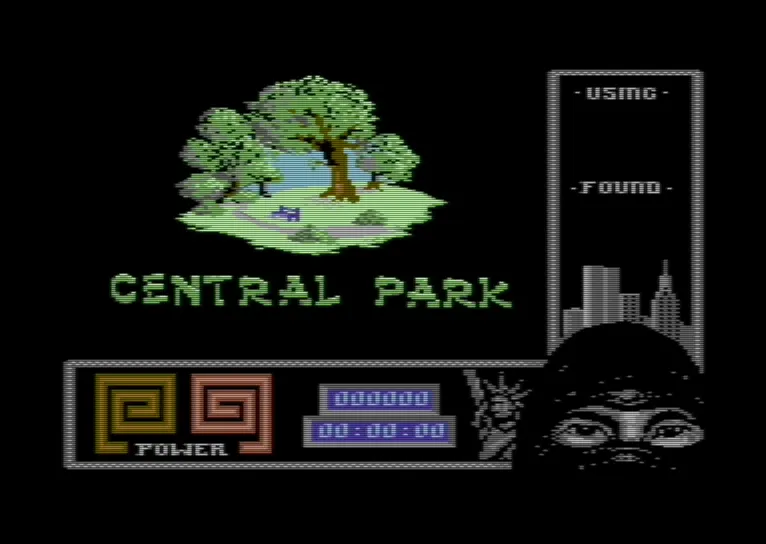
- Level 1 - Central Park: Midnight ponds, park benches, stone bridges, and patrolling street thugs.
- Level 2 - The Street: Brick tenements, payphones, police roadblocks, and armed corporate henchmen.
- Level 3 - The Sewers: Toxic runoff, maze-like pipes, valve puzzles, and floating platforms.
- Level 4 - The Basement: Boiler rooms, electric generators, and vicious guard dogs.
- Level 5 - The Office: Carpeted executive floors, corporate mainframe terminals, and hidden safe codes.
- Level 6 - The Mansion: Kunitoki's fortified, modern estate compound guarding the outer boroughs.
- Level 7 - The Final Conflict: The decisive ritual duel with ancient steel and daggers against Kunitoki.
Neutralizing a vicious guard dog with poisoned meat, locating wire cutters to disable electric fences, or blinding corporate security cameras with smoke bombs blended ancient ninjutsu with modern urban warfare in a way gaming had never witnessed before.
Turning Point Two: The Precision Trap and John Twiddy's Assembly Engine
The second turning point: the price of breathtaking isometric beauty was an unforgiving mechanical precision. Rendering multi-layered isometric scenes on Commodore 64 hardware placed immense strain on the 1 MHz MOS 6510 CPU. John Twiddy engineered a custom display routine that chopped the screen into dynamic tile matrices. While backgrounds were painted as static multicolor bitmaps, moving actors (Armakuni, enemies, thrown shurikens) were dynamically layered as multiplexed hardware sprites.
Yet this perspective introduced legendary difficulty: isometric depth perception. Steering Armakuni via rotational joystick controls (Up-Right, Down-Left) and jumping across Central Park's stepping stones without drowning pushed gamers to the edge of sanity. Misjudging by a single pixel meant instant death in dark water. But for those who mastered the trajectory, Armakuni's katana slashes, staff spins, nunchaku combos, and acrobatic flips offered unrivaled tactile satisfaction.
The Last Ninja 2 completely exhausted the 64-kilobyte memory footprint of the Commodore 64. Because the game could never fit in a single load, each of the 7 levels was packaged as a standalone binary payload.
$4000 - $7FFF: Sprite Frame Banks (Combat movements, item sprites)
$8000 - $BFFF: Core Game Engine, Collision Tables & Guard AI Routines
$C000 - $DFFF: Matt Gray 6581 SID Sound Engine & Instrument Waveforms
$E000 - $FFFF: System I/O Kernal & Fastloader Execution Vectors
Players rewound tapes or flipped floppy disks between missions. What made this lengthy wait celebrated rather than despised was Matt Gray's dedicated loader soundtrack, which filled bedrooms with irresistible rhythms while the cassette spun.
Turning Point Three: Matt Gray and the Funk-Synth Revolution of the 6581 SID
The third turning point: the score. In most contemporary titles, audio was an incidental afterthought. In The Last Ninja 2, music was the lifeblood of the experience. Matt Gray synthesized the Far Eastern modal scales established in the first game by Ben Daglish and Anthony Lees with 1980s electronic synth-funk, slap basslines, and punchy arpeggios.
Themes for Central Park, The Street, and The Sewers stretched the MOS 6581 SID chip's analog filters to their limits. One channel drove the syncopated bass and drums, the second sang the evocative melodic hooks, and the third wove dynamic arpeggios and combat sound effects. This auditory triumph established The Last Ninja 2 not merely as a video game, but as a defining cultural peak in 8-bit chiptune history.
| Platform Port | Graphical Architecture | Audio Hardware & Soundtrack | Gameplay Dynamics & Input Latency |
|---|---|---|---|
| Commodore 64 (1988) | 320x200 Multicolor Bitmap + Hardware Sprites. Unmatched depth. | MOS 6581 SID (3-Channel). Matt Gray's historic funk-synth original. | Perfect joystick responsiveness. Deliberate, rewarding martial mechanics. |
| Commodore Amiga (1989) | OCS Chipset, 32-Color palette. Higher detail environmental art. | MOS Paula (4-Channel 8-Bit PCM). Matt Gray & Reyn Ouwehand samples. | Slight floating inertia on keyboard/joystick mapping compared to C64. |
| MS-DOS / PC (1989) | 16-Color EGA (320x200) or 4-Color CGA. Noticeable color banding. | PC Speaker or AdLib FM Synthesis. Lacks the raw SID analog soul. | Keyboard input latency and rigid turning make precision jumps arduous. |
| ZX Spectrum 128 (1988) | Attribute-clash minimized 256x192 monochrome sharpness. | AY-3-8912 Chip (128K). Excellent multi-channel chiptune conversion. | Remarkably fast engine response and exceptional line-art precision. |
Platform Decision Matrix: How Should You Experience It Today?
| Target Experience | Recommended Platform | Architectural Justification |
|---|---|---|
| Authentic Chiptune & True Gameplay Flow | Commodore 64 (Original Silicon / Ultimate64 / VICE) | Unfiltered 6581 SID analog warmth combined with John Twiddy's native input latency curves. |
| High-Resolution Detail & Stereo Sound | Commodore Amiga (FS-UAE / Amiga 500) | 32-color OCS palette richness and Paula's digitized instrument layers. |
| Instant Multi-Load Mission Transitions | C64 EasyFlash / REU Cartridge Image | Eliminates cassette loading delays entirely, delivering an instantaneous 7-level journey. |
The Last Ninja 2 remains indisputable evidence of how constrained 8-bit silicon could manifest an expansive urban noir atmosphere. As Armakuni prowls through the mist of Central Park toward corporate heights while Matt Gray's basslines pulse through the audio jack, the game asserts itself not as obsolete code, but as enduring interactive art.
Revisiting The Last Ninja 2 today leaves us with two lingering questions:
- Does an adventure's timelessness derive from raw polygon counts, or from the suggestive mystery sparked within an 8-bit isometric canvas?
- Without Matt Gray's opening slap-bass groove during the Central Park tape load, would the video game mythos of 1980s New York ever feel truly complete?
Verified Archival Sources & Primary Citations:
[1] Cale, M. & Twiddy, J. (1988). The Making of The Last Ninja 2, Zzap!64 Magazine Issue 43, pp. 16-19. Archive: Archive.org Zzap!64 Issue 43.
[2] Gray, M. (1988). The Last Ninja 2 SID Sound Architecture & Production Notes, High Voltage SID Collection (HVSC). Source: HVSC Matt Gray Dossier.
[3] Lemon64 Database (2024). The Last Ninja 2: Back with a Vengeance Community Archive & Technical Review. Source: Lemon64 Last Ninja 2 Catalog.