




SHADOW OF THE BEAST (1989)
Newcastle's 12-Layer Parallax Marvel, Roger Dean's Canvases, and Paula's Haunting Panpipes
| Development Studio | Reflections Interactive (Martin Edmondson, Paul Howarth) |
|---|---|
| Publisher & Packaging | Psygnosis (Liverpool, UK) / Cover Artwork by Roger Dean |
| Audio & Sound Design | David Whittaker (Amiga Paula 8364 8-bit PCM) |
| Initial Release Date | 1989 (Amiga OCS), 1990 (Commodore 64, Atari ST, MS-DOS) |
| Target Architectures | Commodore Amiga (MC68000 @ 7.14 MHz), Commodore 64 (MOS 6510) |
| Archive Preservation IDs | Amiga TOSEC: Shadow_of_the_Beast.zip | C64: shadow-of-the-beast_c64.zip |
Summer 1989. The northeastern industrial city of Newcastle upon Tyne, England. Two young programmers, Martin Edmondson and Paul Howarth, spread the technical manuals for the Commodore Amiga's custom chips across their workbenches. At a time when home computers and consoles struggled to scroll one or two background layers smoothly, this duo devised a method to slice the viewport horizontally and vertically, commanding an astonishing 12 independent layers of buttery, multi-speed parallax scrolling.
Liverpool publisher Psygnosis recognized the breakthrough immediately and took an audacious commercial gamble: while standard computer games retailed for £10 to £15, Beast launched in an enormous black box featuring surreal cover artwork by legendary artist Roger Dean, packaged with an exclusive T-shirt for an unprecedented £35. The combination of 12-layer depth, over 128 simultaneous onscreen colors, and David Whittaker’s haunting panpipe melodies was so mesmerizing that computer stores throughout Britain placed Amigas in storefront windows, leaving the game running on demo loops for weeks on end.
Turning Point 1: The 12-Layer Parallax Leap (The Copper Chip Miracle)
In 1989, no consumer computer could handle multi-layer independent scrolling at a locked 50 Hz frame rate. The Atari ST strained under single-layer scrolling, while IBM-compatible PCs remained locked in sluggish 16-color EGA displays.
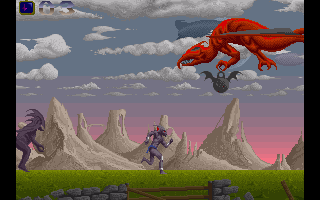
Martin Edmondson and Paul Howarth harnessed the Amiga's secret weapon: the Copper (Coprocessor), synchronizing code execution directly with the cathode ray tube's electron raster beam. High-altitude clouds drifted by at a leisurely pace, distant mountain ranges glided slightly faster, massive gnarl-wood trunks shifted at intermediate speed, while foreground grass and jagged brambles whipped past with dizzying rapidity. In total, 12 discrete planes of spatial depth moved across the screen simultaneously.
Furthermore, the Copper coprocessor dynamically altered the color palette on every horizontal scanline. This broke through the OCS chipset's nominal 32-color hardware boundary, delivering an optical gradient of up to 128 rich hues simultaneously. Shadow of the Beast served as an indisputable technical showcase, demonstrating why Amiga hardware was half a decade ahead of its rivals.
Turning Point 2: David Whittaker’s Haunting, Ethnic Paula Score
Late-1980s computer soundtracks typically gravitated toward upbeat arcade chiptunes or energetic synth-pop. When veteran composer David Whittaker sat down to score Shadow of the Beast, he embraced an unorthodox sonic aesthetic.
Channeling Paula’s 4-channel 8-bit stereo PCM capabilities, Whittaker layered Peruvian panpipes, Japanese koto notes, resonant wooden drums, and melancholic synth strings. When the "Opening / Plains" theme began, players were transported not to a cartoon world, but into the forgotten ruins of a somber, ancient civilization.
This evocative soundtrack demonstrated that game music could transcend basic tempo and rhythm, serving as an emotional vessel of melancholy, sorrow, and alien grandeur.
The narrative tells a grim tale of retribution: stolen as an infant by the dark sorcerer Maletoth, the human child Aarbron is mutated through ancient dark rituals into a monstrous beast to serve as a mindless enforcer. Witnessing his own father bound to an altar and executed at a sacrificial rite jolts his memory awake. Breaking his mystical shackles, Aarbron turns upon the dark master who warped his flesh.
Turning Point 3: The Toll of Visual Perfection (Brutal Discipline)
Behind the awe-inspiring visual splendor of Shadow of the Beast lay an extraordinarily punishing difficulty curve. The Reflections development team had tuned the engine so rigidly to maintaining its 50 Hz frame timing that combat allowed no margin for human error.
Flying eyes, emerging skeletal claws, and subterranean insect beasts demanded pinpoint punch timing. Striking a single frame too early or late allowed the enemy to collide with Aarbron's chest, draining vital health instantly. With zero checkpoints, sparse health pickups, and a labyrinthine subterranean dungeon, reaching the final confrontation was a feat of memorization and razor-sharp reflexes.
Paradoxically, this ferocious difficulty burnished Beast's legendary aura. Those rare players who conquered the quest became legends among their peers, while those who fell in the opening minutes regularly booted the disk just to gaze upon the undulating plains and lose themselves in Whittaker's mournful pipes.
Hardware Architecture & Platform Comparison
| Technical Characteristic | Commodore Amiga (OCS / ECS) | Commodore 64 (8-Bit Port) |
|---|---|---|
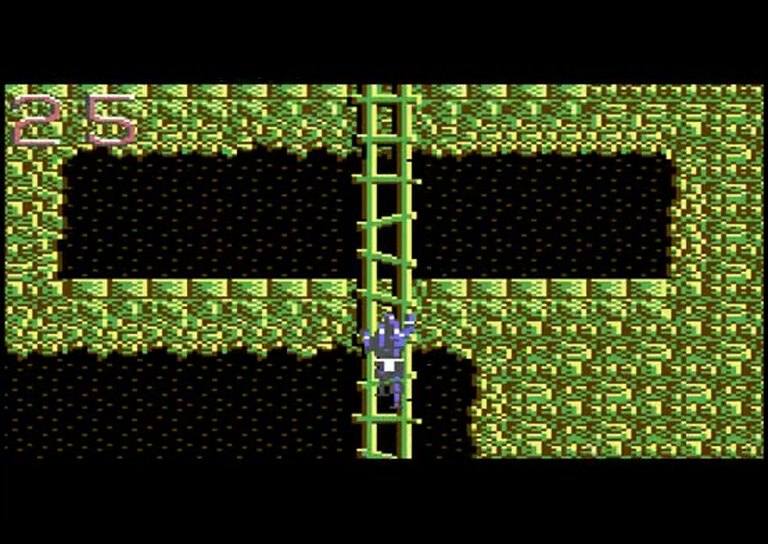
| Parallax Layers | 12 Independent Smooth Hardware Raster Planes (50 Hz) | 2-3 Layers via Software/Character Tricks |
| Simultaneous Onscreen Colors | 128 Colors (Dynamic Copper Gradient Trick) | 16 Fixed VIC-II Colors (High-Contrast Dither) |
| Audio Engine & Composer | Paula 8364 (David Whittaker 4-Channel 8-bit PCM) | MOS 6581 SID (Jeroen Tel Legendary 3-Channel Score) |
| Processor Architecture | Motorola 68000 @ 7.14 MHz (16/32-Bit) | MOS 6510 @ 1.02 MHz (8-Bit) |
| Packaging & Presentation | Large Black Box, Roger Dean Poster, Exclusive T-Shirt | Standard Cassette / Floppy Jewel Case |
Decision Support Matrix: Experiencing Beast Today
| Platform / Flavor | Target Audience | Key Advantages | Constraints & Caveats |
|---|---|---|---|
| Original Amiga (WHDLoad / WinUAE) | Purists seeking the true 1989 graphical revolution and Whittaker's panpipes | Authentic 12-layer parallax, 50 Hz frame stability, legendary Paula sound | Extremely unforgiving hitboxes and difficulty (Save-states recommended) |
| C64 Port (VICE / THEC64) | Fans of extreme 8-bit coding feats and Jeroen Tel's SID masterpiece | One of the most revered SID scores in history, technical audacity | 8-bit resolution and color constraints |
| PS4 Remake (2016 Heavy Spectrum) | Modern action fans wanting to experience Aarbron’s saga in 3D combat | Fluid modern combat, cinematic lore, includes the emulated 1989 original | Lacks the eerie, grainy mystique of the original 16-bit pixel art |
In strict adherence to DigiLiner's preservation charter, no commercial game binaries are hosted on our servers. Verified historical records may be accessed via these trusted public institutions:
Shadow of the Beast proved that interactive entertainment could transcend simple distraction, revealing how custom hardware, fine visual art, and haunting composition could assemble a living, hypnotic spell on screen.
One parting question: standing alone on the plains beneath 12 gliding layers of mountain ridges with panpipes echoing in the breeze, will you charge forward into the fray, or pause simply to watch the hypnotic drift of the horizon?