





Summer 1992, England. Inside Team17's studio, a floppy disk slid into an Amiga 500 and a spacecraft began scrolling across the screen. The studio was still young, yet Project-X would become one of the defining horizontal shooters of the 16-bit era — not because it was generous, but because it refused to be.
At a Glance
| Game | Project-X |
|---|---|
| Developer / Publisher | Team17 / Team17 |
| Release | 1992, Commodore Amiga (MS-DOS and Amiga CD32 versions followed) |
| Genre | Horizontal scrolling shooter |
| Hardware | Amiga OCS/ECS, 68000, 512 KB RAM, Paula audio |
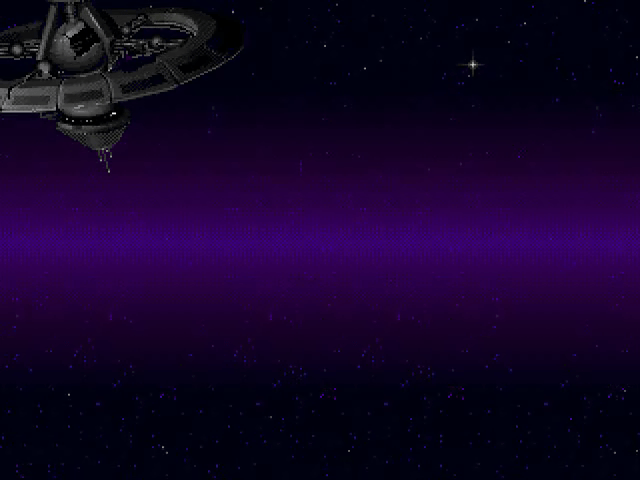
The briefing reads like a terse military file. On Ryxx, an uncolonised planet used as a dumping ground, defective military droids have accumulated. Eventually they begin making decisions of their own and build a station that keeps producing war machines. The player enters the "Project-X" mission in a single craft to destroy that station. The story stays spare; the screen does the talking, filling with enemy waves from the first second.
First turn: difficulty as identity
Project-X has five levels, and it hands out power-ups generously in the first stage before sharply rationing them. Seven weapon lines — guns, side shots, homing missiles, plasma, magma and laser among them — raise the ship's firepower, but a single hit can erase that investment. The game is therefore less about firing more and more about knowing which upgrade to take and when. Contemporary magazines praised its technical polish and complained about its severity in the same breath.
When Team17 realised that most players could not clear the end of the second level, it released Project-X SE for the Amiga CD32 with the difficulty softened. Several Amiga magazines also distributed a cover-disk hack that allowed level skipping. That detail matters: the difficulty was not an accident to be patched away later; it was the design language of the original release.
Second turn: a technical showcase that knew its lineage
The game follows the horizontal shooter tradition of Konami's Gradius, Salamander and Parodius. Team17 used the Amiga chipset to keep background layers and bright explosions moving at a steady pace. At 320×256 with a 32-colour palette and Paula's four channels, the OCS/ECS machine had to work hard to sustain that density. Allister Brimble's score became part of the studio's early sonic signature.
The MS-DOS port had to rebuild the colour and audio balance on different hardware, while the CD32 edition removed floppy-loading limits. The same game feeling different on three platforms is one of the clearest examples of 1990s port culture.
Third turn: a legacy carried by difficulty
Team17 parodied its own game in Superfrog, where a stage called "Project-F" even reused a remixed version of the original theme. A PlayStation sequel, X2, arrived in 1996. The title never became a long-running franchise, but it survived in studio memory and in players' stories about the level they could never beat.
Hardware and play notes
The Amiga 500's 7.09 MHz 68000 and 512 KB of RAM demanded careful memory management while dozens of bullets and enemies moved at once. The near-50 Hz smoothness depended on blitter-driven background scrolling. Paula's four channels had to carry music and explosion effects simultaneously, making channel allocation a genuine engineering decision.
Closing
Project-X suggests that difficulty can be what makes a game remembered rather than merely old. Today a shooter is balanced with player telemetry; in 1992 Team17 made the same call by instinct and paid for it by losing half its audience at the second level. If a game were measured not by how many people finished it but by how many tried again, Project-X was a success by design.
Sources
- Wikipedia, "Project-X" — en.wikipedia.org/wiki/Project-X
- Hall of Light (Amiga game database), "Project-X" — amiga.abime.net/games/view/project-x
- MobyGames, "Project-X" — mobygames.com/game/2060/project-x