 EN
 TR
 DE
 FR
 ES
MOONSTONE: A HARD DAYS KNIGHT (1991)
The 16-Bit Dark Fantasy Pioneer: Visceral Gore, Stonehenge Rituals, and Paula's Gothic Elegies
| Development Studio | Mind's Eye Software (Rob Anderson, Kevin Hoare) |
|---|---|
| Publisher & Distribution | Virgin Games / Amiga OCS & MS-DOS |
| Audio & Sound Architecture | Richard Joseph (Paula 8364 4-Channel 8-Bit PCM) |
| Initial Release Date | Autumn 1991 (Amiga), 1992 (MS-DOS VGA) |
| Target Platform & Media | Commodore Amiga (MC68000 @ 7.14 MHz / 3 Floppies) |
| Genre Archetype | Dark Fantasy / Board Game Strategy & Gladiator Combat Hybrid |
A dreary autumn evening in 1991. Inside a modest south London programming studio called Mind's Eye Software, co-founders Rob Anderson and Kevin Hoare leaned over the glowing phosphorus of an Amiga 500 monitor. In the center of a mud-soaked combat arena, a plate-armored knight brought down a heavy two-handed broadsword. With a sickening, wet crunch, an adversary was sheared cleanly in two, spraying a fountain of crimson pixels across the marshland turf.
Wryly referencing The Beatles' iconic title track, Moonstone: A Hard Days Knight struck the European gaming landscape like a medieval thunderbolt. Amidst a sea of cheerful cartoon platformers, Moonstone was uncompromisingly savage. Combining unflinching anatomical gore, a pagan Stonehenge quest, 4-player hotseat rivalry, and Richard Joseph's spine-chilling gothic audio, Moonstone pioneered the grueling, high-stakes spirit of modern dark fantasy decades ahead of its time.
Turning Point 1: The Most Visceral Combat Physics of the 16-Bit Era
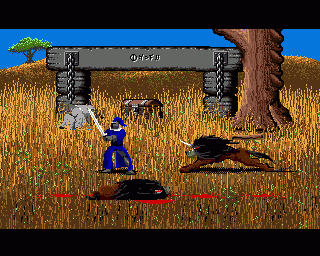
In 1991, no home computer release approached the sheer weight and bodily devastation of Moonstone's combat engine. Rob Anderson designed swordplay not as mindless button mashing, but as a deliberate gladiator dance dictated by spacing, posture, and lethal timing.
Knights could execute overhead cleaves, crouching low-thrusts, defensive back-steps, and stabbing lurches. Every monster species demanded a tailored tactical doctrine: parrying the wild greataxe swings of feral Troggs, dodging the flesh-melting bile of subterranean swamp beasts, and evading the crushing stomps of lumbering Baloks.
The death animations were unforgettable: decapitations sending iron helmets flying, knights dissolving into smoking pools of acid, and heroes immolated into piles of bone and ash by the great dragon. This brutal honesty alarmed censorship boards across Europe, but instantly consecrated Moonstone as a cult phenomenon among players.

Turning Point 2: Stonehenge and the Board-Game-Action Hybrid
To reduce Moonstone to a mere brawler would overlook its ingenious structural brilliance. The game merged board game overworld strategy with real-time arena combat.
Four noble knights (Sir Edward, Sir Jeffrey, Sir Ian, Sir Eric) departed their respective strongholds across a regional map of mythical Britain. The overarching objective: scour four hazardous biomes (Wetlands, Mountains, Forest, Plains) to harvest three enchanted Moonstones and deliver them to Stonehenge beneath a lunar alignment.
When two human players intersected on the overland map, the game seamlessly transitioned into a lethal PVP duel. The victor plundered the fallen knight's hard-earned gold, magic rings, and vitality scrolls. This cutthroat dynamic transformed living rooms into raucous multi-hour tournament arenas.
The oppressive dread permeating Moonstone was elevated by the audio genius of composer Richard Joseph, who utilized the Amiga's Paula sound chip with peerless theatrical flair. Low funeral chimes and wailing winds set a tone of ancient sorrow.
Turning Point 3: The Myth of Difficulty and Collector's Holy Grail
Moonstone showed zero mercy. Limited life reserves, unpredictable ambushes, and the climactic guardian dragon at the center of the henge made completing the journey a test of sheer determination and frame-perfect precision.
Spanning three Amiga floppies, the game suffered from disk attrition and censorship bans in several European markets, leading to a relatively brief manufacturing run. As the years passed, that scarcity combined with reverent word-of-mouth elevated original boxed copies into one of the most expensive and fiercely sought-after collector items in retro computing history.
Hardware Architecture & Platform Comparison
| Technical Characteristic | Commodore Amiga (OCS / ECS 1991) | MS-DOS (VGA Port 1992) |
|---|---|---|
| Graphics Engine & Palette | 32 Colors OCS (High-Contrast Mud & Blood) | VGA 256 Colors (Brighter, Less Moody) |
| Combat Fluidity & Latency | Locked 50 Hz Hardware Timing | Variable Framerate depending on CPU clock |
| Audio Architecture | Paula 8364 4-Channel 8-Bit PCM Stereo | Sound Blaster / AdLib FM Synthesis |
| Media Footprint | 3 x 880 KB Amiga Floppy Disks | Standard 3.5-inch / 5.25-inch PC Disks |
| Multiplayer Functionality | 1–4 Players (Turn-based map + Realtime PVP) | 1–4 Players (Hotseat Play) |
Decision Support Matrix: How to Play Moonstone Today
| Platform / Flavor | Target Audience | Key Advantages | Constraints & Caveats |
|---|---|---|---|
| Amiga WHDLoad (WinUAE / FS-UAE) | Purists seeking the true 1991 gothic atmosphere and authentic Paula sounds | Zero disk swapping, authentic 50 Hz frame pacing, pristine sound effects | Requires Amiga emulator and Kickstart ROM setup |
| DOSBox Staging | Casual retro fans wanting a quick jump into the PC port | Simple setup, direct keyboard mapping | Lacks the raw acoustic resonance and grim palette of the Amiga original |
| 4-Player Hotseat Session | Groups looking for an intense, combative retro party evening | PVP betrayal and high-stakes duels remain electrifying | Punishing difficulty can test friendships |
In strict adherence to DigiLiner's preservation charter, no commercial game binaries are hosted on our servers. Verified historical records may be inspected via:
Moonstone: A Hard Days Knight stands as the darkest, most visceral triumph of the 16-bit era, forging mud, blood, and pagan myth into an unforgettable tactical masterpiece.
One parting question: beneath the pale light of the full moon over Stonehenge, with the third Moonstone gleaming in your hand, will you draw steel and charge the subterranean dragon, or hold your ground and wait for the mist to clear?